

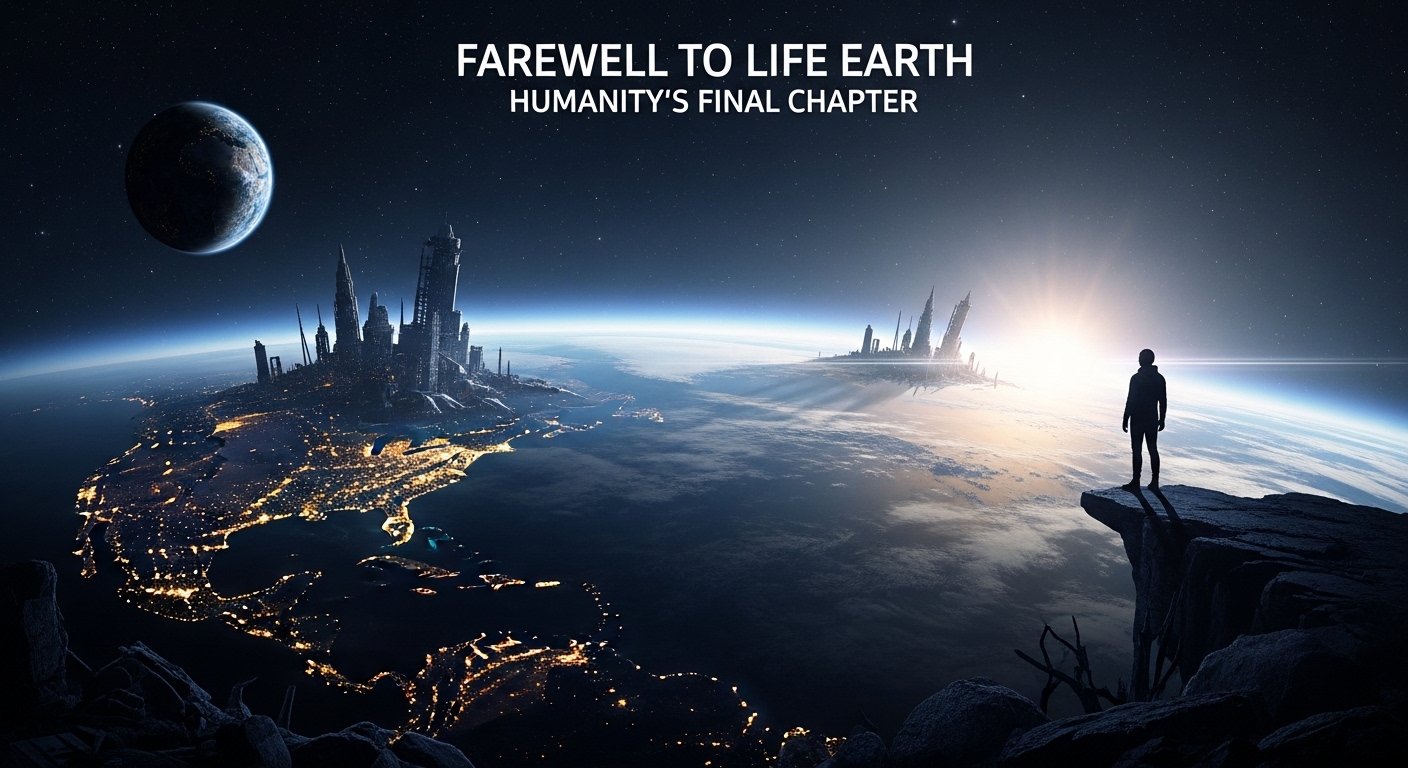
Imagine a time when Earth, our vibrant home, becomes nothing but a whisper of the past. The thought of humanity’s final chapter can be both haunting and fascinating. As we navigate through centuries of advancement, it’s crucial to consider how various forces shape our existence—and ultimately lead us to our end. From astronomical events beyond our grasp to shifts in Earth’s very core, every factor plays a role in this narrative. Join me as we explore the intricate web that leads us toward an inevitable farewell to life on Earth.
Farewell to Life on Earth: Humanity’s Final Chapter
The story of humanity is marked by triumphs and tragedies. Yet, as we thrive, we also leave indelible marks on the planet—pollution, deforestation, and climate change. These human influences alter ecosystems and threaten our survival.
As natural processes unfold over time, Earth’s fate intertwines with astronomical forces and geological shifts. Each event serves as a reminder of our fragility within the grand cosmos. The clock ticks down on life as we know it, pushing us closer to an inevitable end.
Human Influence
Human influence has dramatically reshaped Earth. From deforestation to urbanization, our actions have left an indelible mark on the planet’s ecosystems. We’ve altered habitats and driven countless species to extinction.
As we harness technology, the consequences of industrialization become evident. Climate change accelerates, impacting weather patterns and ocean health. Our pursuit of progress has often come at a cost that may one day lead us toward our own farewell to life on Earth if left unchecked.
Cataclysmic Astronomical Events
The universe is unpredictable. Cataclysmic astronomical events, like supernovae and gamma-ray bursts, can unleash energy that reshapes entire celestial bodies. These violent occurrences remind us of the fragility of life on Earth.
Asteroids and comets also pose a threat. A collision could lead to mass extinction scenarios similar to those that wiped out the dinosaurs. Such cosmic incidents are stark reminders of our place in the vastness of space—temporary and vulnerable amid enduring forces beyond our control.
Orbit and Rotation
Earth’s orbit around the Sun is not a perfect circle. It’s elliptical, leading to variations in distance and solar energy received. This imperfect dance affects climate patterns over millennia.
Rotation plays another crucial role in shaping our planet’s environment. As Earth spins on its axis, it creates day and night cycles, influencing weather systems and ocean currents. However, as time progresses, these rhythms may change dramatically due to shifts in Earth’s rotation caused by various cosmic forces beyond our control.
Geodynamics
Geodynamics plays a crucial role in Earth’s evolution. It involves the study of movement within the Earth’s mantle and crust, affecting everything from plate tectonics to volcanic activity. As these geological processes unfold over millions of years, they shape continents and influence climate.
The constant reshaping impacts habitats and ecosystems. As landmasses collide or drift apart, life adapts—or struggles to survive. This dynamic interplay ultimately contributes to humanity’s legacy as we inch closer to our farewell on this planet.
Solar Evolution
The sun, our life-giving star, is on an inevitable journey. As it ages, it will transition into a red giant phase, expanding vastly and consuming the inner planets. This transformation will dramatically alter Earth’s environment.
As temperatures rise, life as we know it will become untenable. Oceans will evaporate and ecosystems collapse under relentless heat. Humanity’s final chapter coincides with this celestial metamorphosis—a reminder of our fragile existence in the cosmic narrative.
Glaciation
Glaciation has dramatically shaped Earth’s landscape, marking periods when massive ice sheets covered vast regions. These frozen expanses altered sea levels, sculpted valleys, and created unique habitats for various species.
As temperatures dropped during glacial epochs, ecosystems shifted significantly. Flora and fauna adapted to the frigid conditions or faced extinction. This relentless cycle of freezing and thawing deeply influences our planet’s climate patterns, reminding us of nature’s power over life on Earth as we approach a farewell to life on earth scenario.
Obliquity
Obliquity refers to the tilt of Earth’s axis, which significantly influences climate patterns over millennia. This axial tilt varies from 22.1 to 24.5 degrees in cycles lasting about 41,000 years. Such variations lead to dramatic shifts in seasons and temperature distributions.
As Earth’s obliquity changes, it can affect glaciation periods and even alter ecosystems dramatically. A more tilted axis could mean harsher winters or scorching summers, impacting biodiversity and humanity’s survival on this fragile planet we call home.
Continental Drift
Continental drift profoundly shaped our planet’s history. The movement of continents alters coastlines, creates mountains, and influences ecosystems. Over millions of years, the landmasses shifted dramatically.
As they separated and collided, these shifts sparked volcanic activity and earthquakes. Each event left lasting marks on Earth’s geology and climate patterns. This constant motion has been a silent witness to life’s evolution, reminding us that even the ground beneath us is dynamic—a reminder of humanity’s fleeting existence in this ever-changing world.
Solidification of the Outer Core
The solidification of Earth’s outer core signals a crucial turning point in our planet’s fate. As temperatures cool over millions of years, the molten iron and nickel begin to crystallize. This process alters magnetic field dynamics, affecting everything from weather patterns to geological activity.
As the outer core solidifies, it influences tectonic movements and volcanic eruptions. These changes can lead to shifts that might reshape continents or trigger cataclysmic events, steering humanity closer to its final chapter on Earth.
Climate Impact
The climate impact of human activity is immense. Rising greenhouse gas emissions have altered weather patterns, causing extreme events like hurricanes and droughts. These changes challenge ecosystems and threaten species.
As temperatures climb, ice caps melt, leading to rising sea levels that engulf coastlines. Ecosystems struggle to adapt quickly enough, resulting in biodiversity loss. This disruption paints a grim picture for Earth’s future—a stark reminder of our role in shaping the planet’s fate through climate change.
Loss of Oceans
The loss of oceans would mark a profound shift for Earth. Oceans are crucial ecosystems, harboring countless species and regulating climate. Without them, biodiversity would plummet.
As seas recede, the planet’s surface faces drastic changes. Coastal communities vanish, leaving behind barren landscapes. The water cycle shifts dramatically, altering weather patterns globally. Human life struggles to adapt in this new reality where once-thriving marine environments become desolate wastelands devoid of life and color.
Red Giant Stage
As the sun ages, it will enter the red giant stage. This transformation occurs when hydrogen in its core is exhausted. The core contracts while outer layers expand, engulfing nearby planets, including Earth.
During this phase, temperatures rise dramatically. The sun becomes a colossal entity that emits intense radiation. Life as we know it will be impossible to sustain under such conditions. Humanity’s existence hangs by a thread as our planet faces overwhelming heat and gravitational forces from an expanding star.
Beyond and Ultimate Fate
As we ponder the farewell to life on Earth, our gaze shifts beyond what we know. The universe is vast and unfathomable. Stars will die, galaxies will collide, and black holes may swallow everything in their path.
Humanity’s legacy could fade into cosmic dust or be preserved by distant travelers who stumble upon remnants of our existence. Perhaps new forms of consciousness will emerge from the ashes of our civilization.
What lies ahead remains uncertain. Whether in a billion years or far longer, life as we understand it might evolve again under different stars. The ultimate fate of humanity blends with that of the cosmos—an enigmatic journey through time and space where endings spark new beginnings.