
Introduction
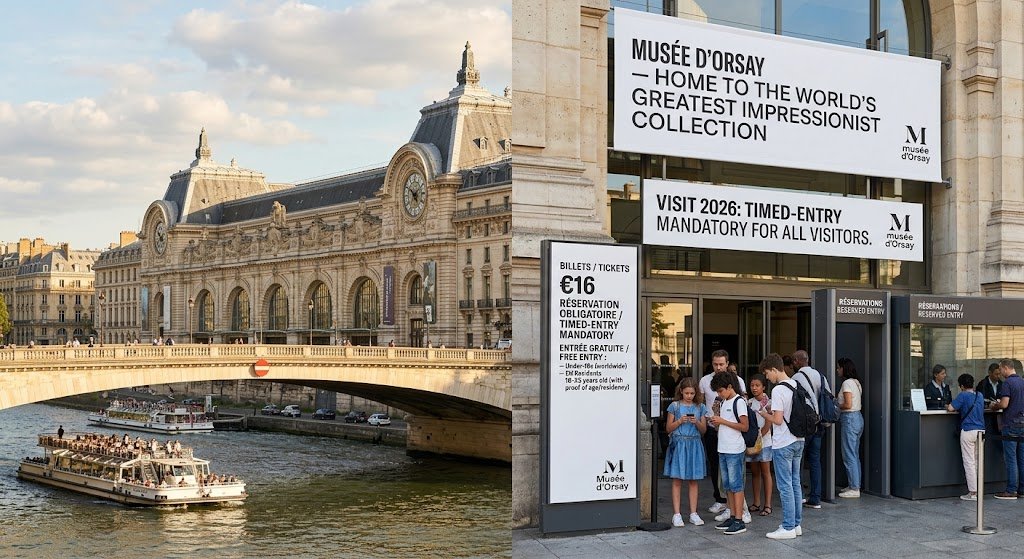
Here’s something most guidebooks skip: the Musée d’Orsay isn’t actually a museum building — it’s a converted train station from 1900, and that’s part of why it feels unlike anywhere else in Paris. If you’re planning a trip in 2026, you’re probably wondering about Musée d’Orsay prices, free entry rules, and which paintings you genuinely can’t skip.
This guide answers exactly that. You’ll learn what the museum is famous for, current 2026 pricing (including the free under-26 rule), how much time to actually budget, and the mistakes that waste half a day for unprepared tourists. Let’s get you sorted before you book.
Table of Contents
- What Is the Musée d’Orsay?
- Why the Musée d’Orsay Matters
- Musée d’Orsay — Key Facts, Prices & Artworks
- How to Plan Your Musée d’Orsay Visit
- Common Mistakes to Avoid
- Expert Tips for Best Results
- Frequently Asked Questions
What Is the Musée d’Orsay?
The Musée d’Orsay is a Paris art museum housed inside a former railway station, sitting right on the Seine across from the Louvre. It opened in 1986 and holds the world’s largest collection of Impressionist and Post-Impressionist art, including huge numbers of Monets, Renoirs, and Van Goghs.

Think of it like this: if the Louvre is the ancient library of art history, the Musée d’Orsay is the chapter that changed everything — the moment painters stopped copying reality exactly and started chasing light, mood, and color instead. The building itself, with its giant glass clock and soaring iron arches, was literally a train station platform until the 1970s.
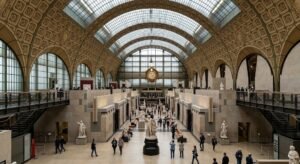
A real-world comparison helps here. Imagine New York’s Grand Central Terminal being converted to hold every famous Impressionist painting you’ve ever seen in a textbook — that’s roughly the scale and drama of walking into musée d’orsay for the first time.
Why the Musée d’Orsay Matters
Skipping the Musée d’Orsay on a Paris trip means missing one of the most concentrated art collections on Earth. Here’s why tourists rank it alongside the Louvre:
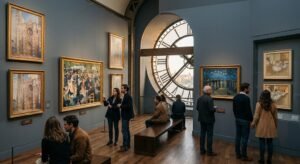
- Unmatched Impressionist depth: The museum holds roughly 86 Monets, 81 Renoirs, and 43 Degas works in one building.
- Manageable size: Unlike the sprawling Louvre, you can realistically see the highlights in a focused visit without exhaustion.
- Iconic architecture: The former train station’s glass clock face is one of the most photographed spots in Paris.
- Famous, recognizable works: Van Gogh’s Starry Night Over the Rhône and Manet’s Olympia both hang here.
- Strong value for young travelers: EU residents aged 18–25 get free entry, a genuine perk for student trips.
The museum welcomes millions of visitors annually, making it one of the most-visited art institutions in the world.
Musée d’Orsay — Key Facts, Prices & Artworks

Musée d’Orsay Price in 2026
The standard adult ticket costs €16 online, while the Thursday evening rate (after 6 pm) drops to €12–14. On-site tickets cost slightly less but mean longer queues, so booking ahead is the smarter move.
Is Musée d’Orsay Free?
Yes, in specific cases. The first Sunday of every month is free for everyone, though you must reserve a timed slot online in advance. It’s also permanently free for visitors under 18 and EU residents aged 18–25 with valid ID.
Musée d’Orsay Artworks You’ll Recognize
The fifth floor holds the star Impressionist collection — this is where you’ll find Renoir’s Bal au moulin de la Galette, Monet’s Rouen Cathedral series, and Degas’s ballet pastels.
| Ticket Type | Price (2026) | Notes |
|---|---|---|
| Standard adult (online) | €16 | Priority entrance included |
| Thursday evening (after 6pm) | €12–14 | Fewer crowds, best value |
| Under 18 (any nationality) | Free | Valid ID required |
| EU residents 18–25 | Free | Valid ID required |
| First Sunday of the month | Free for all | Mandatory advance booking |
How to Plan Your Musée d’Orsay Visit
- Book your timed-entry ticket online first. Since renovation work began in March 2026, walk-up entry is no longer available, so reserve your slot before you leave your hotel.
- Check if you qualify for free entry. If you’re under 26 and an EU resident, or under 18 from anywhere, bring ID and skip the ticket cost entirely.
- Head straight to the fifth floor. Most visitors start on the ground floor and burn energy before reaching the Impressionist galleries, so reverse the order.
- Budget at least 2–3 hours. A rushed visit under 90 minutes means missing entire wings, especially the sculpture terraces.
- Pick a quiet time slot. Thursday evenings and Tuesday mornings at opening consistently have the smallest crowds.
- Combine it with the Orangerie if you have time. A combo ticket covers both museums and works out cheaper than buying separately.
- Grab lunch at the level-two restaurant. The Belle Époque dining room is part of the original station and worth the stop.
Common Mistakes to Avoid
- Mistake: Assuming you can walk in without a booking. With the current renovation through 2028, timed entry is mandatory for every visitor, free tickets included.
- Mistake: Confusing this with the Louvre’s free Friday nights. That perk belongs to the Louvre, not the Musée d’Orsay — there’s no equivalent free Friday here.
- Mistake: Only budgeting one hour. Most tourists underestimate the size and rush through, missing entire floors.
- Mistake: Mixing up “d’Orsay” the museum with “D’Orsay” the perfume house. The historic French fragrance brand shares the name but has no connection to the museum.
- Mistake: Skipping the ground floor sculptures. Visitors fixate on the paintings upstairs and miss impressive marble works near the entrance.
Expert Tips for Best Results
- Book your slot 2+ weeks ahead for first-Sunday free entry, since these dates fill fast.
- Visit Thursday after 6 pm for the lightest crowds and the reduced ticket price.
- Bring physical ID, not just a photo, if you’re claiming under-26 or under-18 free entry.
- Rent the audio guide for context on the lesser-known works beyond the famous names.
- Wear comfortable shoes — the museum spans multiple levels with plenty of walking between wings.
-

Musée d’Orsay – Travel To Savor
Frequently Asked Questions
What is the Musée d’Orsay famous for?
It’s famous for holding the world’s largest Impressionist and Post-Impressionist collection, including major works by Monet, Van Gogh, Renoir, and Degas. The building itself, a converted 1900 train station with a giant glass clock, adds to its reputation as one of the most striking museums in Paris.
Is the Musée d’Orsay free?
It’s free on the first Sunday of every month for all visitors, though advance booking is mandatory. It’s also permanently free for anyone under 18 and for EU residents aged 18–25 with valid photo ID. Everyone else pays the standard €16 ticket, or the reduced €12–14 Thursday evening rate.
How much time do you need at Musée d’Orsay?
Plan for 2 to 3 hours minimum to properly see the highlights without rushing. Art lovers who want to explore every floor, including the sculpture terraces and temporary exhibitions, should budget closer to 4 hours. Going straight to the fifth-floor Impressionist wing first helps you prioritize if time is tight.
Conclusion
Visiting the Musée d’Orsay comes down to three things: book your timed-entry ticket in advance, know whether you qualify for free admission, and head straight to the fifth floor before your energy fades. Get these right and you’ll walk away having seen Monet, Van Gogh, and Degas without the crowds ruining it. Start planning your ticket today — will you catch it on a free first Sunday, or save time and go on a quiet Thursday evening?