
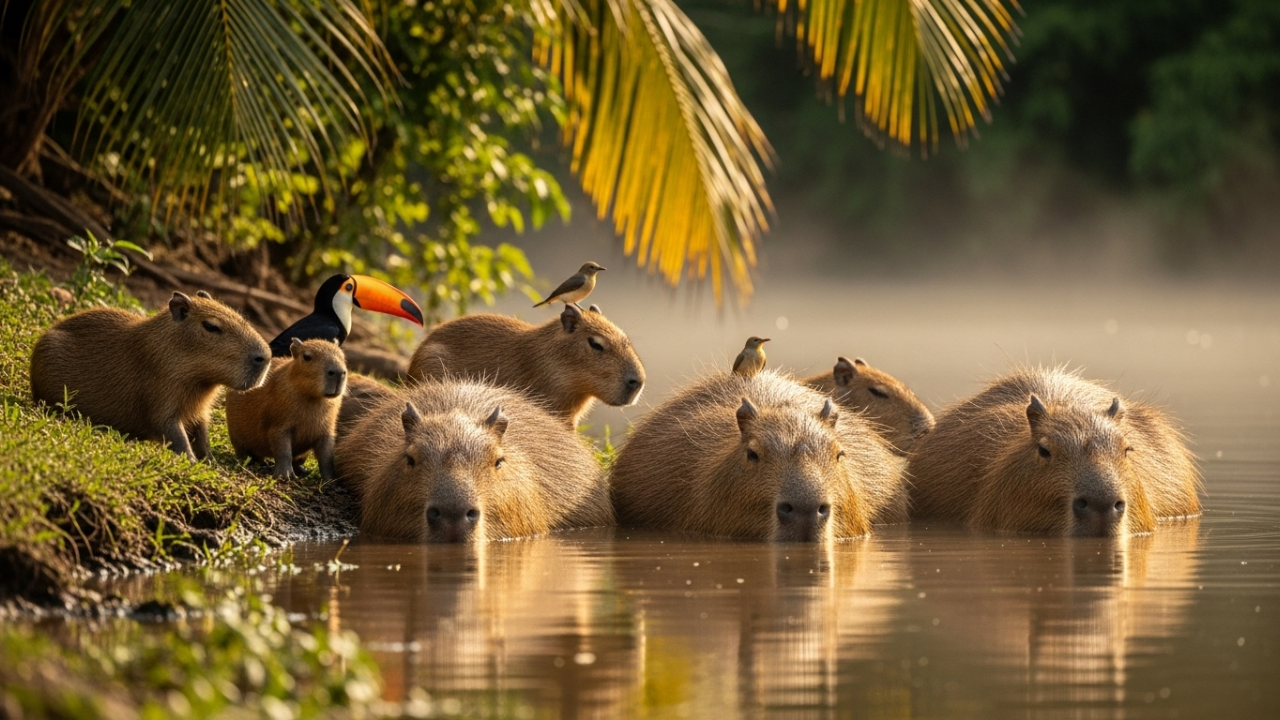
Have you ever heard of the charming cadibara? These adorable creatures are often considered the world’s largest rodents, and their quirky personalities have captured hearts around the globe. With their gentle demeanor and social nature, capybaras are more than just cute animals; they’re fascinating members of the animal kingdom with a rich history and unique traits. If you’re curious about these delightful beings, get ready to uncover ten amazing facts that might surprise you! Whether you’re an animal lover or simply seeking something new to learn, dive into this captivating world of capybaras.
10 Fascinating Facts About Capybaras You Didn’t Know
Capybaras are remarkable creatures with plenty of surprises. These gentle giants can weigh up to 150 pounds, making them the largest rodents in the world. Their unique social structure allows them to live in groups of 10 to 20, where they bond and communicate through a range of sounds.
These animals are semi-aquatic, often found near rivers or lakes, which helps them evade predators like jaguars and caimans. Interestingly, capybaras have webbed feet that aid their swimming skills. With such captivating traits and behaviors, it’s no wonder they’re beloved by many!
Etymology and Origins
The term “capybara” comes from the indigenous Guarani word “kapiÿva,” which translates to “master of the grasses.” This name reflects their natural habitat and feeding preferences, as these creatures are often found in lush, grassy areas near water sources.
Capybaras belong to the family Caviidae, making them relatives of guinea pigs. Their origins can be traced back to South America, where they have evolved over thousands of years into the largest rodent species on Earth. These intriguing animals showcase a unique blend of cultural and biological significance.
Physical Description and Unique Traits
Capybaras are the largest rodents in the world, weighing up to 150 pounds and reaching lengths of about four feet. Their stocky bodies have short legs and webbed feet, ideal for their semi-aquatic lifestyle. They sport a coarse brownish fur that helps them blend into their natural habitat.
One unique trait is their teeth, which continuously grow throughout their lives. To keep them from becoming too long, capybaras gnaw on tough grasses and plants daily. Their expressive eyes and small ears add to their charming appearance, making them hard to resist!
Habitat and Geographic Distribution
Capybaras thrive in a variety of habitats, primarily near water sources like rivers, lakes, and wetlands. Their preference for these environments helps them stay cool and provides ample access to food. These social creatures are often found in savannas or dense forests where they can bask under the sun or hide from potential threats.
Geographically, capybaras are native to South America and inhabit countries such as Brazil, Venezuela, Colombia, and Argentina. They have adapted well to both tropical climates and temperate regions. This wide distribution highlights their resilience as a species amidst varying environmental conditions.
Diet and Feeding Behavior
Capybaras are herbivores, primarily feeding on grasses and aquatic plants. Their diet is rich in fiber, which helps them maintain healthy digestion. These gentle giants often graze for several hours a day, consuming large quantities of vegetation.
Interestingly, capybaras practice coprophagy—eating their own feces to maximize nutrient absorption. This behavior ensures they get the most out of their plant-based diet. Their efficient feeding habits allow them to thrive in a variety of environments where food sources may vary seasonally or regionally.
Social Behavior and Group Structure
Capybaras are incredibly social creatures, often found in groups of 10 to 20 individuals. These close-knit communities provide safety and companionship. Social structures can vary, with a dominant male leading the group. They communicate through various sounds like barks, whistles, and purrs.
Within these groups, capybaras engage in grooming rituals that strengthen bonds among members. This behavior is essential for their well-being and helps maintain harmony within the troop. Their playful nature fosters relationships not only with each other but even with other species that share their habitat.
Reproduction and Life Cycle
Capybaras have a unique reproductive cycle. Females typically give birth to a litter of four to five pups after a gestation period of about 150 days. The young are born fully furred and with their eyes open, ready to explore their surroundings quickly.
After birth, the mother is highly protective. Pups start grazing on grass within a week but continue nursing for up to 16 weeks. Social groups often include multiple generations, allowing the older capybaras to help care for the young, fostering strong family bonds in their communities.
Predators and Survival Mechanisms
Capybaras, the gentle giants of the rodent world, face various predators in their natural habitats. Jaguars, caimans, and anacondas are among their most formidable threats. Their large size may deter some predators, but they remain vigilant due to their social nature.
To survive, capybaras exhibit clever adaptations. They often reside near water bodies for quick escape routes. When danger looms, they can submerge themselves entirely underwater while keeping just their nostrils exposed—a remarkable survival tactic that helps them evade detection by predators lurking nearby.
Conservation Status and Human Interaction
Capybaras face various threats, primarily due to habitat loss and hunting. Their natural habitats are often destroyed for agriculture and urban development. In some regions, they are hunted for their meat and skin, which poses significant challenges to their populations.
Human interaction can be both beneficial and detrimental. While some communities embrace capybaras as part of the ecosystem, others see them merely as pests. Conservation efforts aim to protect these fascinating creatures by raising awareness about their ecological importance and promoting sustainable practices that benefit both capybaras and humans alike.
Capybaras in Popular Culture
Capybaras have gained a unique place in popular culture, often portrayed as the ultimate chill animal. Their relaxed demeanor and friendly nature make them perfect social media stars. Instagram and TikTok are filled with adorable capybara videos, showcasing their playful interactions with other animals.
They’ve also made appearances in various films, cartoons, and books. Often depicted as gentle giants, they charm audiences of all ages. This furry creature has become an emblem of relaxation and camaraderie, bridging connections between humans and wildlife in delightful ways.
Interesting and Fun Facts About Capybaras
Capybaras, often called “nature’s couch potatoes,” are the world’s largest rodents. They can weigh up to 150 pounds and measure about four feet in length. These gentle giants are semi-aquatic, flourishing near rivers and lakes. Their webbed feet make them excellent swimmers.
Interestingly, capybaras have an unusual social structure; they live in groups of 10 to 20 individuals. They communicate through a variety of sounds, including barks, whistles, and clicks. Known for their friendly demeanor, these animals often share their space with other species like birds and monkeys without any issues.
FAQs
Curious about capybaras? You’re not alone! Many people wonder if a capybara is a pig. Surprisingly, it’s not; it’s the largest rodent in the world. Some even mistakenly think they’re related to rats, but they belong to their own unique family.
Another common question is whether capybaras are friendly toward humans. Generally, yes! They tend to be sociable and enjoy interacting with people and other animals. Their gentle nature makes them quite special in the animal kingdom.
Is a capybara a pig?
Capybaras are often mistaken for pigs due to their stout bodies and partially webbed feet. However, they belong to the rodent family, specifically the Caviidae group, which also includes guinea pigs. Unlike pigs, capybaras have unique traits that set them apart in the animal kingdom.
While both animals can be found grazing in similar habitats, their diets differ significantly. Capybaras primarily feed on grasses and aquatic plants. This herbivorous diet highlights their adaptation as semi-aquatic mammals rather than just resembling common farm animals like pigs.
Is capybara a type of rat?
Many people often wonder if the capybara is a type of rat due to its rodent classification. While both belong to the order Rodentia, capybaras are actually distinct from rats. They belong to their own family called Caviidae, which also includes guinea pigs.
Capybaras are the largest rodents in the world, significantly larger than any rat species. With their unique traits and social behaviors, they stand apart from common perceptions of what a “rat” represents in terms of size and lifestyle.
Is capybara friendly to humans?
Capybaras are known for their gentle and friendly nature, often described as the world’s largest rodents. They generally exhibit a calm demeanor and can be quite social with humans. Many people who encounter capybaras find them approachable, enjoying interactions in parks and zoos.
However, like any wild animal, each capybara has its personality. Some may be more reserved or shy than others. It’s essential to approach them respectfully and understand their boundaries to foster a positive experience for both parties involved.
Why are capybaras so special?
Capybaras, often referred to as the world’s largest rodents, have an undeniable charm that captivates both animal lovers and casual observers alike. Their gentle demeanor makes them one of the most friendly creatures in the animal kingdom. They thrive in social settings, forming tight bonds with their peers and even other species.
These animals display remarkable adaptability to various habitats, showcasing a unique blend of nature’s design. From their impressive swimming abilities to their distinct vocalizations, capybaras are anything but ordinary. The way they interact with humans adds another layer of intrigue; many people find joy in simply observing these tranquil beings.
Their role in ecosystems is equally significant. As herbivores, they contribute to plant growth by grazing on grasses and aquatic plants. This creates a balanced environment for other wildlife too.
Whether appearing alongside celebrities or gracing social media feeds as adorable pets, capybaras continue to enchant us all with their extraordinary qualities that truly make them special.