
INTRODUCTION
Picture this: You’re standing on a bustling street in Guilin at 7 AM. The air smells of pork bone broth and chili oil. Locals are slurping noodles from stainless steel bowls while balancing on tiny stools. You’re about to have your first bowl of Guilin rice noodles—and honestly, it might just be the best breakfast of your life.
But here’s the thing. Guilin rice noodles aren’t just food. They’re a 2,200-year-old tradition, a cultural icon, and the ultimate travel hack for eating like a local. In this guide, you’ll learn exactly what these noodles are, why they matter, how to order them, and where to find the best bowls in 2026. No tourist traps. No fluff. Just real, actionable advice so you can slurp with confidence.
TABLE OF CONTENTS
-
What Are Guilin Rice Noodles?
-
Why Guilin Rice Noodles Matter – Key Benefits
-
Guilin Rice Noodles – Types, Styles, and How They Work
-
How To Order and Eat Guilin Rice Noodles Like a Local
-
Common Mistakes and Myths to Avoid
-
Expert Tips for the Best Guilin Rice Noodles Experience
-
Frequently Asked Questions
What Are Guilin Rice Noodles?
Guilin rice noodles (桂林米粉 Guìlín mǐfěn) are a traditional Chinese noodle dish made from rice flour and water. They’re white, silky, and come in two main shapes: round strips (like thick spaghetti) and flat strips (like fettuccine). But the noodles themselves are just the starting point.
Think of Guilin rice noodles like a blank canvas. The real magic happens in the broth—a rich, savory liquid simmered for hours with pork bones, beef bones, monk fruit, and a secret blend of spices. Each shop has its own recipe, passed down through generations. Some use over 20 ingredients and simmer their broth for up to 20 hours.
Here’s an analogy to help you get it: Guilin rice noodles are to Guilin what pizza is to Naples. It’s simple on the surface, but the difference between a good bowl and a life-changing bowl comes down to craftsmanship, tradition, and a whole lot of love.
The dish dates back to the Qin Dynasty (221–206 BC). According to legend, northern soldiers sent to build the Ling Canal missed their wheat noodles. So they ground local rice into a paste and shaped it into noodle-like strands. The herbal broth also helped them adapt to the humid southern climate. And just like that, a culinary legend was born.
Why Guilin Rice Noodles Matter – Key Benefits
So why should you care about Guilin rice noodles on your trip? Here are the real reasons this dish deserves a spot at the top of your must-eat list:
-
Unbelievably affordable. A bowl of Guilin rice noodles costs just 5–8 RMB (less than $1.50 USD). That’s cheaper than a coffee in most cities. You can eat like a king on a backpacker’s budget.
-
Fast and filling. Locals finish a bowl in under 3 minutes. It’s the ultimate quick breakfast before a day of sightseeing. And it’ll keep you full until lunch.
-
Fully customizable. You control the heat, the toppings, and the texture. Add pickled long beans, crispy soybeans, chili oil, or fresh herbs—your bowl, your rules.
-
A true cultural experience. Eating Guilin rice noodles isn’t just about fuel. It’s about connecting with 2,200 years of history. Every slurp ties you to the soldiers, merchants, and families who’ve made this dish a staple for millennia.
-
Available everywhere, all day. Noodle shops in Guilin are like cafes in Italy—they’re on every single block. Many are open 24 hours. You’re never far from a hot bowl.
Fun fact: Guilin is now a geographical trademark for rice noodles. That means true Guilin rice noodles can only come from this region. You’re eating something you literally can’t get anywhere else in the same way.
Guilin Rice Noodles – Types, Styles, and How They Work
Not all Guilin rice noodles are created equal. Here’s a breakdown of the main types you’ll encounter, so you know exactly what to order.
By Noodle Shape
| Shape | Description | Best For |
|---|---|---|
| Round (圆粉 yuán fěn) | Thick, spaghetti-like strands | Dry-mixed noodles; holds sauce well |
| Flat (切粉 qiē fěn) | Wide, fettuccine-like strips | Broth noodles; absorbs soup flavor |
H3: By Serving Style
1. Dry-Mixed Noodles (卤菜粉 lǔ cài fěn) – The Local Favorite
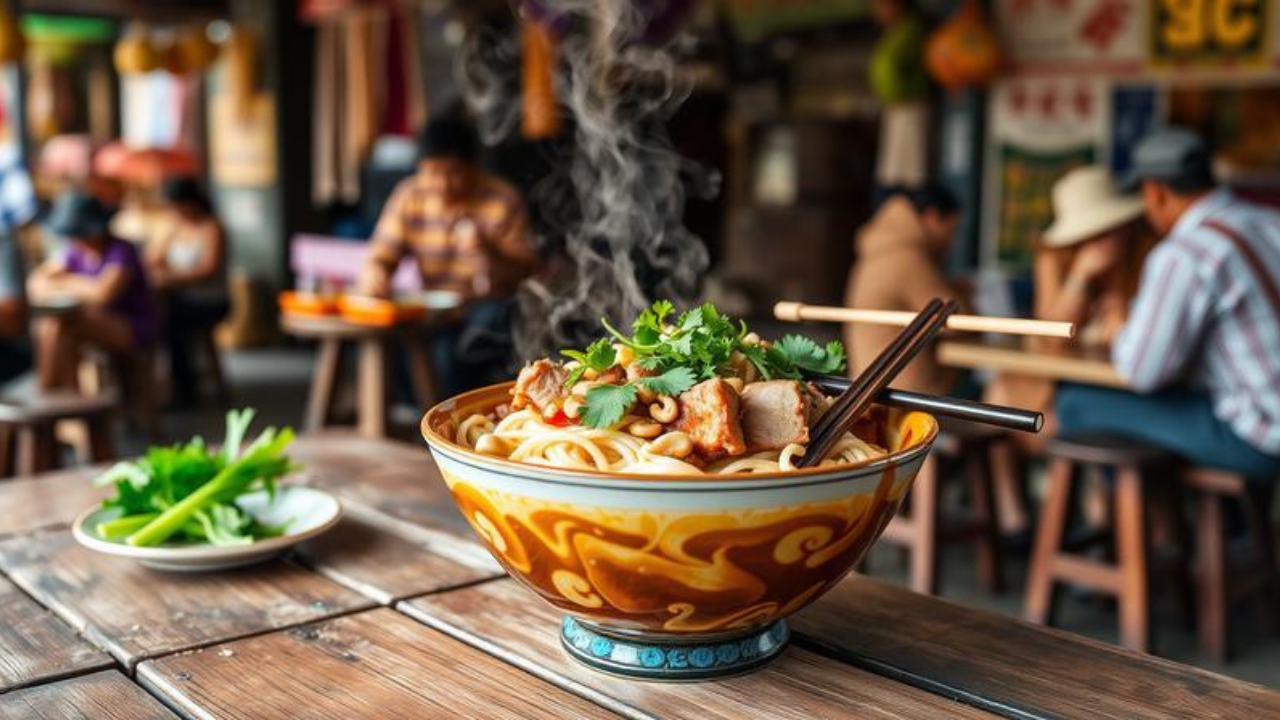
The noodles are heated, drained, and topped with a savory gravy, crispy pork belly, braised beef, fried peanuts, and pickled vegetables. You eat it dry first, then add broth at the end. This is the most authentic way locals eat Guilin rice noodles.
2. Broth Noodles (汤粉 tāng fěn) – The Lighter Option
The noodles are served swimming in a light, savory soup made from pork bones. This version is milder and perfect if you prefer a gentler flavor profile.
3. Hot and Sour Noodles (酸辣粉 suān là fěn) – For Spice Lovers
A meat-free version with vinegar, sour beans, and plenty of chili. Refreshing, tangy, and addictive—especially popular in summer.
4. Horse Meat Rice Noodles (马肉米粉 mǎ ròu mǐfěn) – The Specialty
This is the most famous and beloved variety in Guilin. Thinly sliced cured horse meat is served in a rich, aromatic broth. It’s considered an intangible cultural heritage dish in the city. If you’re adventurous, this is a must-try.
How To Order and Eat Guilin Rice Noodles Like a Local
Follow these 7 simple steps to nail your Guilin rice noodles experience on the first try:
Step 1: Find a busy shop. Look for a place packed with locals, not tourists. Simple stainless-steel bowls and prices around 5–8 RMB are good signs. If a shop is empty at breakfast time, walk past it.
Step 2: Choose your noodle shape. Decide between round (chewier) or flat (softer). If you’re unsure, point at what the person in front of you is eating.
Step 3: Pick your serving size. Portions are measured in liang (两)—about 50g per liang. One liang is a small breakfast. Two liang (100g) is a standard meal. Three liang (150g) is for hungry travelers.
Step 4: Choose your style. Go for dry-mixed (卤菜粉) for the authentic local experience. Or choose broth noodles (汤粉) if you want something lighter.
Step 5: Pay first. Most small shops are pay-before-you-eat. Hand over your cash (or scan WeChat/Alipay) and get your bowl.
Step 6: Load up on toppings. Head to the self-service condiment bar. Add pickled long beans, bamboo shoots, chili oil, garlic, scallions, and crispy soybeans. Go easy on the chili at first—Guilin peppers are no joke.
Step 7: Eat it right. Mix everything thoroughly and eat the noodles dry first. Only add the broth at the end—after you’ve finished the noodles. Then drink the soup from the bowl. That’s the local way.
Common Mistakes and Myths to Avoid
Myth: “Guilin rice noodles are always spicy.”
Truth: The noodles themselves aren’t spicy at all. The heat comes from the chili oil and peppers you add yourself. You control the spice level entirely.
Myth: “You should add the broth first.”
Truth: For dry-mixed noodles, adding broth too early ruins the dish. The gravy gets diluted, and you lose the intense flavor. Eat the noodles dry first, then add broth at the end.
Myth: “All rice noodle shops are the same.”
Truth: Every shop has its own secret broth recipe. Some simmer for 10 hours, others for 20. The quality varies dramatically. Follow the locals—not the crowds of tourists.
Myth: “You have to eat horse meat noodles to get the real experience.”
Truth: Horse meat noodles are a specialty, but dry-mixed pork or beef noodles are what most locals eat daily. Start with the classic, then get adventurous.
Myth: “You can get the same noodles outside Guilin.”
Truth: Guilin is a geographical trademark for rice noodles. The water, the rice, the climate—they all affect the final product. Eating them in Guilin is a totally different experience.
Expert Tips for the Best Guilin Rice Noodles Experience
-
Eat breakfast like a local. Most noodle shops are busiest between 6–9 AM. That’s when the broth is freshest and the queues are shortest.
-
Bring small change. Many small shops are cash-only for small purchases. Have 5–10 RMB notes ready.
-
Watch and learn. Observe how locals eat—how they mix, how they slurp, when they add broth. Copy them.
-
Don’t overthink it. If a shop is full of locals and smells amazing, just walk in and point at what looks good. You really can’t go wrong.
-
Try at least two different shops. The broth recipes vary so much that one bowl isn’t enough to truly understand the dish. Compare and contrast—it’s part of the fun.
Frequently Asked Questions
Q: How much do Guilin rice noodles cost in 2026?
A: A standard bowl costs 5–8 RMB (less than $1.50 USD). A small vegetarian portion can be as low as 3 RMB. With meat, expect around 4.5–5.5 RMB. Even with extra toppings, you’ll rarely pay more than 10 RMB.
Q: Are Guilin rice noodles gluten-free?
A: Yes! They’re made from rice flour and water—no wheat involved. Just be careful with the soy sauce in some gravies, as it may contain gluten. If you have celiac disease, ask the vendor about the gravy ingredients.
Q: Can I find Guilin rice noodles outside of Guilin?
A: You’ll find them in many Chinese cities and even some international Chinatowns. But the authentic version—made with Li River water and local rice—is only in Guilin. The texture and flavor just aren’t the same elsewhere.
CONCLUSION
Guilin rice noodles are more than just a meal—they’re a 2,200-year-old tradition, a budget-friendly breakfast, and a window into local life. Here are your three takeaways:
-
Order dry-mixed noodles for the most authentic experience.
-
Customize your bowl with pickled veggies, peanuts, and chili—but go easy on the heat.
-
Follow the locals, not the tourists. Busy shops with simple setups are your best bet.
Now it’s your turn. Start today—find a bustling noodle shop, grab a bowl, and slurp like you mean it. Your taste buds will thank you.
Question for you: What’s the most memorable street food you’ve ever eaten while traveling? Drop it in the comments—I’d love to hear your story.