
Would you buy a zoo ticket and end up photographing an inflatable penguin? That happened in China, and it’s why artificial zoo is such a confusing search for travelers. Hundreds of people showed up for the grand opening of Guishan Zoo in Yulin expecting penguins, and found giant inflatable replicas instead.
Here’s the twist: the term doesn’t point to one place. It can mean a park full of replica animals, a virtual zoo on your phone, or a real zoo with man-made rock scenery. It can also mean a fake zoo that dresses up one animal as another.
This casual guide shows you what each type means, why it matters for your trip, and how to spot the fake stuff before you pay. You’ll get a simple step-by-step plan, common mistakes, insider tips, and quick answers to the questions tourists ask most. Grab a snack, and let’s sort the real from the fake.
Table of Contents
- What Is an Artificial Zoo?
- Why Does an Artificial Zoo Matter for Tourists?
- Artificial Zoo Types: Key Facts and How They Work
- How to Visit an Artificial Zoo Without Getting Fooled
- Common Fake Zoo Mistakes and Myths to Avoid
- Expert Tips for Your Zoo Trip
- Frequently Asked Questions
What Is an Artificial Zoo?
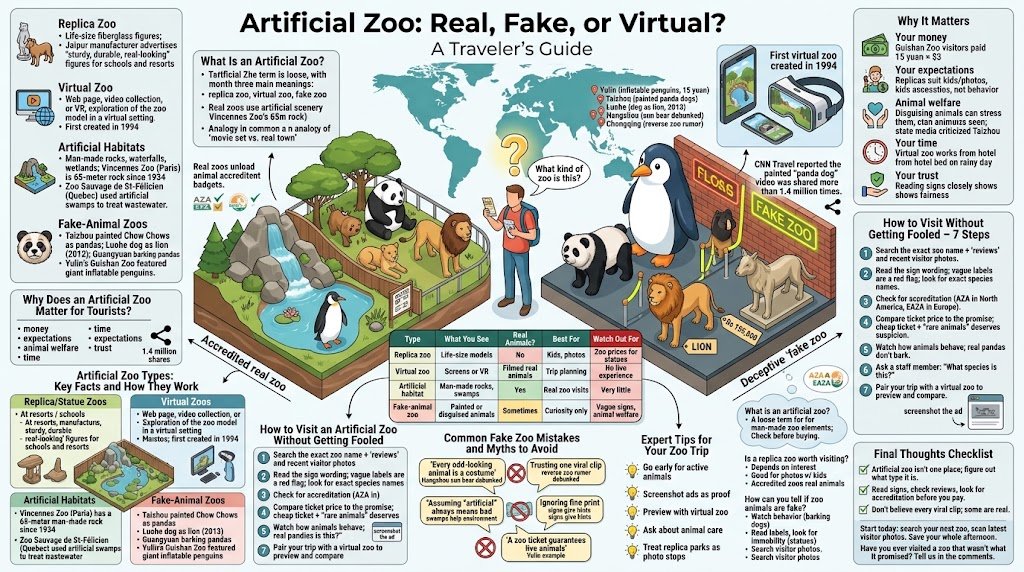
An artificial zoo is a zoo-style attraction where some or all of the “animals” or “nature” isn’t the real thing. No official definition exists, so the phrase covers a few different ideas.
Think of a movie set versus a real town. Both look like a place, but only one has actual residents.
You’ll run into three main meanings. A replica zoo uses life-size models, and one Indian manufacturer builds fiberglass animal figures for schools and resorts. A virtual zoo puts animals on a screen, and the first one was created in 1994. A fake zoo passes one animal off as another, like the Chow Chows painted to look like pandas at Taizhou Zoo. Artificial Zoo Animals Figure at Rs 135000 | Jawahar Nagar | Jaipur | ID: 12930171430 +2
Some real zoos also use artificial scenery. Paris’s Vincennes Zoo has a 65-meter man-made rock that has stood there since it opened in 1934. The rock is artificial, but the animals living around it are real.
Why Does an Artificial Zoo Matter for Tourists?
Knowing which kind you’re visiting protects your money, your photos, and your conscience. Here’s what’s at stake:
- Your money: Tickets cost real cash even when the animals aren’t real. Guishan Zoo visitors paid 15 yuan (about $3) to see the animals.
- Your expectations: Replica exhibits suit kids and photo ops, but they can’t match watching a live animal move.
- Animal welfare: Disguising animals can stress them. State media criticized the Taizhou exhibit for misleading visitors and mistreating the dogs.
- Your time: A virtual zoo works from your hotel bed on a rainy day.
- Your trust: Reading signs closely shows you which places play fair.
Data point: According to CNN Travel, as reported by Oneindia News, the painted “panda dog” video was shared more than 1.4 million times. Fake animals spread fast online, so check details before you trust a viral clip.
Artificial Zoo Types: Key Facts and How They Work
Replica and Statue Zoos
These parks use life-size figures instead of live animals. The Jaipur manufacturer mentioned earlier advertises its fiberglass figures as sturdy, durable, and real-looking. You’ll find them at resorts, school campuses, and roadside parks.
Virtual Zoos
A virtual zoo is an exploration of the zoo model in a virtual setting, such as a web page, a collection of videos, or virtual reality. Use one to plan your trip or entertain kids on a slow travel day.
Artificial Habitats
Man-made rocks, waterfalls, and wetlands can help real zoos. Quebec’s Zoo Sauvage de St-Félicien used artificial swamps to treat wastewater from the zoo and campground. That’s artificial done right.
Fake-Animal Zoos
These attractions swap in cheaper stand-ins. A zoo in Luohe tried to pass a large hairy dog off as a lion back in 2013. Skip these unless you’re just curious.
| Type | What You See | Real Animals? | Best For | Watch Out For |
|---|---|---|---|---|
| Replica zoo | Life-size models | No | Kids, photos | Zoo prices for statues |
| Virtual zoo | Screens or VR | Filmed real animals | Trip planning | No live experience |
| Artificial habitat | Man-made rocks, swamps | Yes | Real zoo visits | Very little |
| Fake-animal zoo | Painted or disguised animals | Sometimes | Curiosity only | Vague signs, animal welfare |
How to Visit an Artificial Zoo Without Getting Fooled {#how-to-visit}
Follow these steps and you’ll dodge the inflatable-penguin surprise:
- Search the exact zoo name. Add the word “reviews” and scan recent visitor photos. Real pictures tell you more than the glossy website does.
- Read the sign wording. Vague labels are a red flag. Taizhou officials said they had advertised the animals as “panda dogs” and made no false claims. Look for exact species names instead.
- Check for accreditation. Accredited zoos meet published standards for animal care. Browse if you’re in North America, or look for EAZA membership in Europe.
- Compare the ticket price to the promise. A cheap ticket plus a long list of “rare animals” deserves suspicion. The Yulin posters showed peacocks, penguins, and ostriches for a tiny fee.
- Watch how the animals behave. Real pandas don’t bark. At the Guangyuan zoo, visitors realized the “pandas” were dogs when the animals started barking and panting.
- Ask a staff member a simple question. Try “What species is this?” A real zoo answers quickly and proudly.
- Pair your trip with a virtual zoo. Preview the animals online, then compare them with what you see. Then plan your next stop with.
Common Fake Zoo Mistakes and Myths to Avoid
- Myth: “Every odd-looking animal is a costume.” When the Hangzhou sun bear went viral, people claimed it was a human in a suit. Experts debunked that claim.
- Mistake: Trusting one viral clip. The “reverse zoo” rumor said Lehe Ledu in Chongqing cages visitors while animals roam free. Snopes found the description is inaccurate, because visitors can also tour the safari park by bus or car and explore walking areas.
- Mistake: Assuming “artificial” always means bad. Man-made habitats and swamps can help animals and the environment.
- Mistake: Ignoring the fine print. Signs and posters often hint at what’s inside. Read them before you pay.
- Myth: “A zoo ticket guarantees live animals.” The Yulin opening proved otherwise. Check first.
Expert Tips for Your Zoo Trip
- Go early. Real animals are most active in the morning, and the crowds are smaller.
- Screenshot the ad. Keep the promo photos, so you have proof if the exhibits don’t match.
- Preview with a virtual zoo. Kids love spotting animals they’ve already “met” online.
- Ask about animal care. Good zoos happily explain feeding, enrichment, and vet routines.
- Treat replica parks as photo stops. Budget an hour, not a full day.
Frequently Asked Questions
What is an artificial zoo?
An artificial zoo is a loose term for zoo-style attractions built around man-made elements. It can mean life-size replica animals, a virtual zoo on a screen, artificial habitats like rock formations, or, in the worst cases, real animals disguised as something else. Because no official definition exists, always check what a specific place offers before you buy a ticket.
Is a replica zoo worth visiting?
It depends on what you want. A replica zoo works well for kids, photos, and cheap fun, while a virtual zoo suits trip planning and rainy days. If you want to watch real animals move and behave, pick an accredited zoo instead. Read recent reviews first, and skip any place that hides which species it keeps.
How can you tell if zoo animals are fake?
Watch behavior and read labels. Painted dogs still bark, pant, and wag their tails, which is how visitors caught the Taizhou exhibit and the Guangyuan zoo. Inflatable or statue animals never move at all. Check signs for exact species names, and ask staff if the labels look vague. When in doubt, search for recent visitor photos.
Final Thoughts
Three points matter most. First, an artificial zoo isn’t one place, so find out whether you’re getting replicas, a virtual tour, man-made scenery, or real animals in disguise. Second, read the signs, check reviews, and look for accreditation before you pay. Third, don’t believe every viral clip, because some “fakes” turn out to be real.
Start today: open a new tab, search your next zoo by name, and scan the latest visitor photos. That two-minute check can save your whole afternoon.
Have you ever visited a zoo that wasn’t what it promised? Tell us about it in the comments.