
You searched trallehylde and got five different answers. Is it a slatted shelf, a scaffold plank, or recycled trolley wood? You’re not imagining things, because online guides really do disagree on what the word means.
Here’s the short version. The word is Danish, and it’s tied to rustic wooden wall shelves made from reused wood. Design blogs in 2026 call it a sustainable shelf that adds warmth, storage, and eco-friendly style to a home.
This casual guide sorts fact from fluff. You’ll learn what the word means, why people love these shelves, and how the main styles compare. You’ll also get a simple buying-and-hanging plan, mistakes to skip, styling tips, and answers to three common questions.
If you love Nordic design, or you’re eyeing a shelf as a souvenir from a Copenhagen trip, start here.
Table of Contents
- What Is a Trallehylde?
- Why Does the Trallehylde Matter for Your Home?
- Trallehylde Types: Key Facts and How They Compare
- How to Buy and Hang a Trallehylde
- Common Wooden Shelf Mistakes and Myths
- Expert Tips for Styling Your Shelf
- Frequently Asked Questions
What Is a Trallehylde?
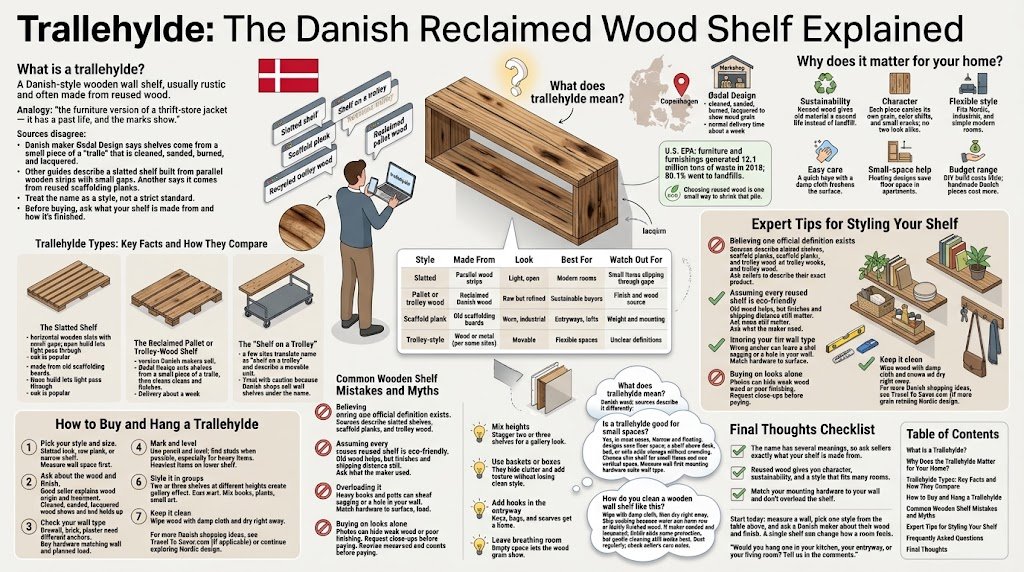
A trallehylde is a Danish-style wooden wall shelf, usually rustic and often made from reused wood. Think of it as the furniture version of a thrift-store jacket. It has a past life, and the marks show.
Sources don’t agree on the details, and that’s the confusing part. Danish maker Øsdal Design says its shelves come from a small piece of a “tralle” that’s cleaned, sanded, burned, and lacquered to show off the wood grain. Other guides describe a slatted shelf built from parallel wooden strips with small gaps between them. Another says it comes from reused scaffolding planks.
So treat the name as a style, not a strict standard. Before you buy, ask what your shelf is made from and how it’s finished.
Why Does the Trallehylde Matter for Your Home?
These shelves keep showing up in 2026 home-decor lists, and there are good reasons why:
- Sustainability: Reused wood gives old material a second life instead of a trip to the landfill.
- Character: Each piece carries its own grain, color shifts, and small cracks, so no two look alike.
- Flexible style: Reused-wood shelves fit Nordic, industrial, and simple modern rooms.
- Easy care: A quick wipe with a damp cloth freshens the surface.
- Small-space help: Floating designs save floor space in apartments.
- Budget range: A DIY build costs little, while handmade Danish pieces cost more.
Data point: The U.S. EPA reports that furniture and furnishings generated 12.1 million tons of waste in 2018, and 80.1 percent of it went to landfills. Choosing reused wood is one small way to shrink that pile.
Trallehylde Types: Key Facts and How They Compare
The Slatted Shelf
Many guides describe a shelf made from horizontal wooden slats with small gaps between them. The open build lets light pass through and shows off the wood. Oak is a popular material.
The Reclaimed Pallet or Trolley-Wood Shelf
This is the version Danish makers sell. Øsdal Design cuts its shelves from a small piece of a tralle, then cleans and finishes the wood. Their normal delivery time is about a week, so plan ahead if you want one for a specific date.
The Scaffold-Plank Shelf
Some guides describe a shelf made from old scaffolding boards. The cleaned planks keep marks, color changes, and rough textures, which give the shelf a handmade feel. Hooks can turn a shelf like this into an entryway organizer.
The “Shelf on a Trolley”
A few sites translate the name as “shelf on a trolley” and describe a movable unit. Treat that description with caution, because Danish shops sell wall shelves under the name.
| Style | Made From | Look | Best For | Watch Out For |
|---|---|---|---|---|
| Slatted | Parallel wood strips | Light, open | Modern rooms | Small items slipping through gaps |
| Pallet or trolley wood | Reclaimed Danish wood | Raw but refined | Sustainable buyers | Finish and wood source |
| Scaffold plank | Old scaffolding boards | Worn, industrial | Entryways, lofts | Weight and mounting |
| Trolley-style | Wood or metal (per some sites) | Movable | Flexible spaces | Unclear definitions |
How to Buy and Hang a Trallehylde
Follow these steps for a shelf you’ll love for years:
- Pick your style and size. Decide whether you want a slatted look, a raw plank, or a narrow shelf for small items. Measure the wall space first.
- Ask about the wood and finish. A good seller explains where the wood came from and how they treated it. Cleaned, sanded, and lacquered wood shows off the grain and holds up better.
- Check your wall type. Drywall, brick, and plaster need different anchors. Buy hardware that matches your wall and your planned load.
- Mark and level. Use a pencil and a level so the shelf hangs straight. Find studs when you can, especially for heavy items.
- Hang and test. Tighten the mounting hardware, then add weight slowly. Put the heaviest items on the lower shelf.
- Style it in groups. Two or three shelves at different heights create a gallery effect. Mix books, plants, and small art pieces.
- Keep it clean. Wipe the wood with a damp cloth and dry it right away. For more Danish shopping ideas, see
Common Wooden Shelf Mistakes and Myths
- Believing one official definition exists. Sources describe slatted shelves, scaffold planks, and trolley wood. Ask sellers to describe their exact product.
- Assuming every reused shelf is eco-friendly. Old wood helps, but finishes and shipping distance still matter. Ask what the maker used.
- Ignoring your wall type. The wrong anchor can leave a shelf sagging or a hole in your wall. Match the hardware to the surface.
- Overloading it. Heavy books and pots can stress the mounts. Check weight limits and spread the load.
- Buying on looks alone. Photos can hide weak wood or poor finishing. Request close-ups before you pay.
Expert Tips for Styling Your Shelf
- Mix heights. Stagger two or three shelves for a gallery look.
- Use baskets or boxes. They hide clutter and add texture without losing the clean style.
- Try a kitchen setup. Display cookbooks, spices, or a mini herb garden.
- Add hooks in the entryway. Keys, bags, and scarves get a home.
- Leave breathing room. Empty space lets the wood grain show.
Frequently Asked Questions
What does trallehylde mean?
Trallehylde is a Danish word, and sources describe it in different ways. Some call it a slatted wooden shelf, others a shelf made from reused planks, and a few translate it as “shelf on a trolley.” Danish makers use the name for wall shelves cut from reclaimed wood. Because definitions vary, always check the product description and photos before you buy.
Is a trallehylde good for small spaces?
Yes, in most cases. Narrow and floating designs save floor space, and a shelf mounted above a desk, bed, or sofa adds storage without crowding the room. Choose a slim shelf for small items and use vertical space. Measure your wall first, and check that your mounting hardware suits your wall type.
How do you clean a wooden wall shelf like this?
Wipe it with a damp cloth, then dry it right away. Skip soaking, because water can harm raw or lightly finished wood. If a maker sanded and lacquered your shelf, the finish adds some protection, but gentle cleaning still works best. Dust it regularly, and check the seller’s care notes for anything specific to your piece.
Final Thoughts
Three points matter most. First, the name has several meanings, so ask sellers exactly what your shelf is made from. Second, reused wood gives you character, sustainability, and a style that fits many rooms. Third, match your mounting hardware to your wall and don’t overload the shelf.
Start today: measure a wall, pick one style from the table above, and ask a Danish maker about their wood and finish. A single shelf can change how a room feels.
Would you hang one in your kitchen, your entryway, or your living room? Tell us in the comments.