
INTRODUCTION
Have you ever tasted a bowl of Guilin rice noodles in Guangxi and wished you could bring that magic home? You’re not alone. That silky, chewy texture. That deeply aromatic broth. Those crunchy peanuts and tangy pickled vegetables. It’s a flavor combination that haunts your memory long after the trip ends.
Here’s the good news: you can recreate that experience in your own kitchen. This Guilin rice noodles recipe breaks down the process into simple, manageable steps—no professional chef skills required. You’ll learn what makes this dish special, how to make the signature卤水 (brine) from scratch, and exactly how to assemble a bowl that rivals any street stall in Guilin. Let’s get cooking.
TABLE OF CONTENTS
-
What Is a Guilin Rice Noodles Recipe?
-
Why Make This Guilin Rice Noodles Recipe – Key Benefits
-
Guilin Rice Noodles – Types, Ingredients, and How It Works
-
How To Make Guilin Rice Noodles at Home – Step-by-Step
-
Common Mistakes and Myths to Avoid
-
Expert Tips for the Best Guilin Rice Noodles
-
Frequently Asked Questions
What Is a Guilin Rice Noodles Recipe?
A Guilin rice noodles recipe is a set of instructions for making 桂林米粉 (Guìlín mǐfěn)—the iconic noodle dish from Guilin, Guangxi, China. Think of it as a blueprint for recreating one of China’s most beloved street foods in your own kitchen.
At its heart, this dish has four core components:
-
The noodles – Chewy, silky rice noodles made from rice flour and water. They come in round or flat shapes.
-
The卤水 (brine) – The soul of the dish. A concentrated, savory sauce simmered with pork bones, beef bones, and 10 to 30 different spices.
-
The toppings – Crispy pork belly (锅烧), braised beef, pickled long beans, fried soybeans, peanuts, and fresh herbs.
-
The bone broth – A lighter soup served on the side or poured over the noodles.
Here’s an analogy: Guilin rice noodles are like a customizable flavor orchestra. The noodles are the stage, the卤水 is the conductor, and the toppings are the individual musicians. Each element plays its part, and when they come together, it’s pure harmony.
Why Make This Guilin Rice Noodles Recipe – Key Benefits
Why should you bother making Guilin rice noodles from scratch? Here’s why this recipe is worth your time:
-
Save money. A bowl in Guilin costs 5–8 RMB (under $1.50 USD)**. But if you’re not in China, restaurant versions can cost **$12–$18. Making it at home saves you a fortune.
-
Control the quality. You choose the ingredients. No MSG overload. No mystery meats. Just fresh, real food.
-
Customize everything. Like it spicy? Add more chili. Hate酸笋? Leave it out. Your bowl, your rules.
-
Impress your friends. Nothing says “I’m a serious cook” like pulling off a complex regional dish. This Guilin rice noodles recipe will make you look like a culinary rockstar.
-
Relive your travels. If you’ve been to Guilin, making this dish is a delicious souvenir. If you haven’t, it’s a taste of adventure from your own kitchen.
Fun fact: Guilin is a geographical trademark for rice noodles. The authentic version uses Li River water and local rice. While you can’t replicate that exactly at home, this recipe gets you as close as possible.
Guilin Rice Noodles – Types, Ingredients, and How It Works
H3: The Two Main Styles
| Style | Chinese Name | Description | Best For |
|---|---|---|---|
| Gravy Dry Noodles | 卤菜粉 | Noodles mixed with卤水, topped with meats and veggies. Eat dry first, add broth at the end. | The authentic local experience |
| Broth Noodles | 汤粉 | Noodles served in a lighter pork bone soup. Milder flavor. | Lighter meals or first-timers |
H3: Essential Ingredients for This Recipe
For the卤水 (Brine) – The Soul:
-
Pork bones and beef bones
-
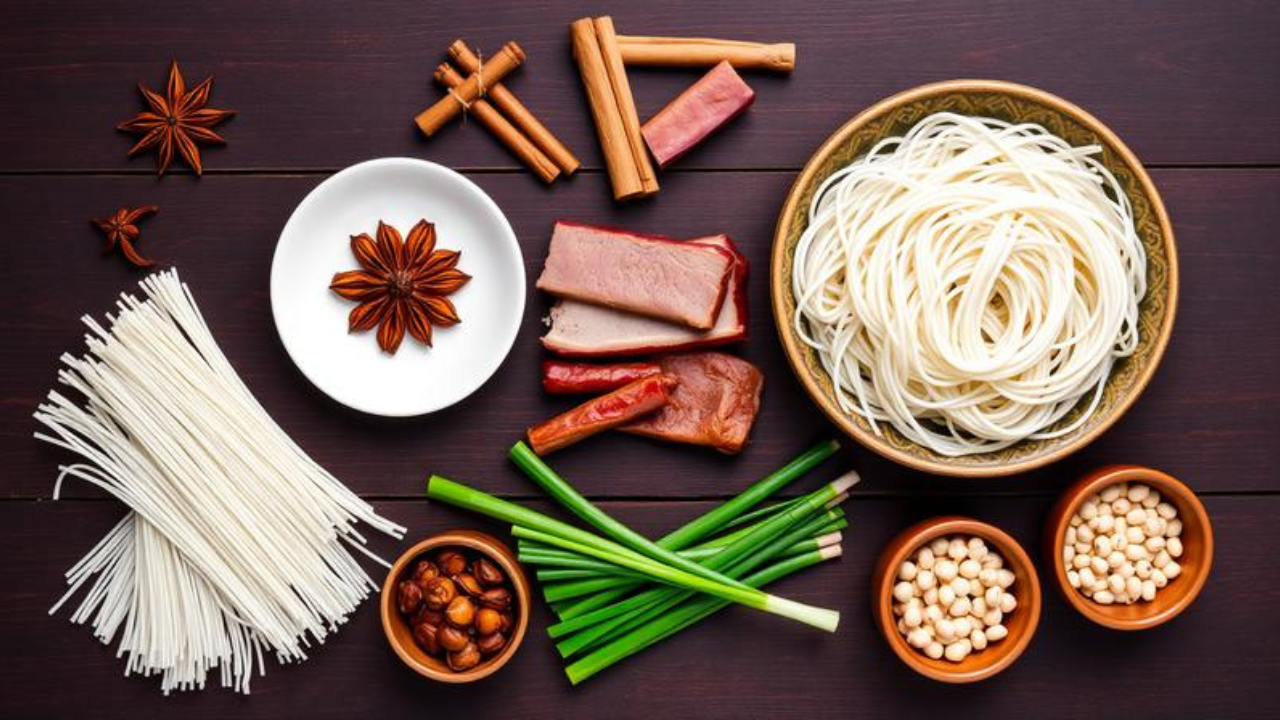
Spices: star anise, cinnamon, cloves, Sichuan peppercorns, fennel seeds, sand ginger, dried tangerine peel
-
Monk fruit (罗汉果) – a signature Guangxi ingredient that adds natural sweetness
-
Guilin fermented bean curd (桂林腐乳) and Sanhua wine (三花酒) – local specialties that add depth
-
Soy sauce, rock sugar, salt
For the noodles and toppings:
-
Rice noodles – dry or fresh. Dry noodles have more chew; fresh are more convenient
-
Crispy pork belly (锅烧) – the most traditional meat topping
-
Pickled long beans (酸豆角) and pickled bamboo shoots (酸笋) – tangy, crunchy, essential
-
Fried soybeans and roasted peanuts – textural contrast
-
Scallions, cilantro, garlic, chili oil
H3: How the Flavors Come Together
The magic of a Guilin rice noodles recipe lies in layering. The卤水 is simmered for 8 hours or more, extracting deep umami from bones and spices. The monk fruit and rock sugar add a subtle sweetness that balances the saltiness and spice. The pickled vegetables cut through the richness with acidity. And the crispy pork belly adds a satisfying crunch. Every bite is a journey through contrasting textures and flavors.
How To Make Guilin Rice Noodles at Home – Step-by-Step
Follow these 8 steps for a bowl of Guilin rice noodles that tastes like it came from a Guilin street stall.
Step 1: Soak the soybeans overnight. Rinse 100g soybeans, cover with water, add 1 teaspoon salt, and soak for at least 10 hours. Drain and pat dry. Fry in oil over medium heat until golden and crispy. Set aside.
Step 2: Make the卤水 (brine). This is the most important step. In a dry pan, toast your spices (star anise, cinnamon, cloves, Sichuan peppercorns, fennel seeds) over low heat for 1–2 minutes until fragrant. Be careful—burnt spices = bitter卤水.
Step 3: Build the卤水 base. In a large pot, add pork bones, beef bones, water, ginger, scallions, and the toasted spices. Bring to a boil, then reduce to a gentle simmer. Add rock sugar, soy sauce, fermented bean curd, and monk fruit. Simmer for at least 4–6 hours (overnight is even better).
Step 4: Prepare the meat. While the卤水 simmers, prepare your toppings. For crispy pork belly (锅烧) : boil pork belly until tender, pat dry, prick the skin, and deep-fry until golden and crispy. For braised beef, add beef to the卤水 during the last hour of simmering.
Step 5: Strain the卤水. After simmering, strain out all solids. The卤水 should be dark, aromatic, and slightly sweet-savory. Store in a jar—it keeps for weeks in the fridge.
Step 6: Prepare the rice noodles. If using dry rice noodles, soak in cold water for 2–3 hours until soft. If using fresh noodles, rinse under cold water. When ready to eat, blanch in boiling water for 10–30 seconds—don’t overcook!
Step 7: Prepare the toppings. Chop pickled long beans and pickled bamboo shoots. Mince garlic. Chop scallions and cilantro. Have your chili oil ready.
Step 8: Assemble your bowl. Place the blanched noodles in a bowl. Add 2–3 tablespoons of卤水 and mix well. Top with crispy pork belly, braised beef, pickled vegetables, fried soybeans, peanuts, scallions, and cilantro. Add a spoonful of chili oil if you like heat. Eat the noodles dry first, then add a splash of bone broth at the end—that’s the authentic way.
Common Mistakes and Myths to Avoid
Mistake: “You can skip the卤水 and just use soy sauce.”
Truth: The卤水 is the soul of Guilin rice noodles. Soy sauce alone is flat and one-dimensional. The卤水’s complexity—from bones, spices, monk fruit, and fermented bean curd—is what makes this dish special.
Mistake: “Boil the noodles for 5 minutes like pasta.”
Truth: Rice noodles cook much faster. Fresh noodles need only 10–30 seconds in boiling water. Overcooking turns them mushy. Al dente is the goal.
Mistake: “Add the broth first.”
Truth: For dry-mixed noodles (卤菜粉), adding broth too early dilutes the卤水. Eat the noodles mixed with卤水 and toppings first. Add broth at the end and drink it like a soup.
Myth: “This recipe is too complicated for home cooks.”
Truth: While the卤水 takes time, most of it is hands-off simmering. The active cooking time is under 30 minutes. Plus, you can make a big batch of卤水 and use it for weeks.
Myth: “You need special equipment.”
Truth: All you need is a large pot, a pan, and a knife. No fancy gadgets required.
Expert Tips for the Best Guilin Rice Noodles
-
Make the卤水 ahead. It tastes even better the next day after the flavors meld overnight. Make a big batch and store it in the fridge.
-
Don’t skip the monk fruit. It adds a natural sweetness that balances the saltiness and is a signature Guangxi ingredient. Find it at Asian grocery stores or online.
-
Toast your spices before adding them to the卤水. This releases their essential oils and deepens the flavor. Just 1–2 minutes over low heat makes a huge difference.
-
Use fresh rice noodles if possible. They have a better texture than dried. Check your local Asian supermarket’s refrigerated section.
-
Balance your toppings. You want crunchy (peanuts, soybeans), tangy (pickled veggies), savory (meat), and fresh (herbs) in every bite.
Frequently Asked Questions
Q: Can I make this Guilin rice noodles recipe vegetarian?
A: Yes. Replace the bone broth with vegetable stock and use mushrooms and tofu instead of meat. The卤水 can be made with vegetarian “oyster” sauce and extra spices. It won’t be完全相同, but it’ll still be delicious.
Q: How long does homemade卤水 last?
A: Stored in a sterilized glass jar in the fridge,卤水 lasts 2–3 weeks. You can also freeze it in small portions for up to 3 months. Just reheat before using.
Q: Where can I buy authentic Guilin rice noodles outside China?
A: Check Asian grocery stores (refrigerated section for fresh noodles, dried noodle aisle for dried). Online retailers like Amazon and specialty Asian food sites also sell them. Look for Guilin米粉 on the package.
CONCLUSION
You now have everything you need to make an authentic bowl of Guilin rice noodles at home. Let’s recap the three most important points:
-
The卤水 is everything. Take your time with it—slow-simmered flavor can’t be rushed.
-
Don’t overcook the noodles. Ten seconds is plenty. Al dente is the texture you’re after.
-
Eat it the local way. Mix the dry noodles with卤水 and toppings first. Add broth only at the end.
Start today. Grab your ingredients, clear your afternoon, and make a pot of卤水 that’ll fill your kitchen with the aroma of Guilin. Your taste buds will thank you.
Question for you: What’s the one dish you’ve traveled for and desperately wanted to recreate at home? Drop it in the comments—I’d love to hear your story.