
INTRODUCTION
I remember standing in the bustling Centenary Farmers’ Market in Thimphu, utterly overwhelmed. To my left, a vendor was hand-pulling buckwheat noodles so fresh they steamed in the cold morning air. To my right, strings of dried yak meat hung like dark, savory wind chimes. A woman pressed a paper cone of spicy fermented soybeans into my palm and smiled. “First time in Bhutan?” she asked. I nodded, mouth already full. “Then you must eat everything.”
That, in a sentence, is the Bhutanese attitude toward food: generous, unguarded, and deeply proud. But for an outsider, Bhutanese cuisine can feel like a beautiful puzzle. What is that fiery cheese dish everyone talks about? Do they really eat noodles at high altitudes? Is meat even allowed in a Buddhist kingdom? And can you, a curious eater thousands of miles away, replicate any of this in your own kitchen? This article is your complete, meticulously researched guide to Bhutan food culture, noodles, meat, menus, and recipes, along with answers to the most pressing questions travelers ask, from halal availability to the country’s economic standing. By the time you finish reading, you’ll not only understand what’s on the plate—you’ll understand why it matters so deeply.
WHY BHUTANESE FOOD MATTERS NOW
Bhutan is no longer a hidden Shangri-La. As the kingdom carefully opens its doors to global travelers and its diaspora spreads to cities like New York, Melbourne, and Toronto, its cuisine is having a quiet but undeniable moment. In a food world saturated with fusion trends and fleeting viral dishes, Bhutanese cooking offers something radical: authenticity. This is a cuisine shaped by geography, spirituality, and centuries of self-reliance, not by marketing departments.
The numbers tell part of the story. Bhutan is the world’s only carbon-negative country, with over 70% forest cover. Farming is overwhelmingly organic by practice, not certification. The average Bhutanese diet relies on red rice, buckwheat, maize, fresh cheese, and a staggering volume of chilies—not as seasoning, but as a vegetable eaten by the handful. Buddhism, the dominant religion, imposes a complicated relationship with meat: many lay Buddhists eat it, but slaughter is traditionally outsourced to a small non-Buddhist minority. Meat-free days are common, making vegetarianism a cultural norm rather than a subculture. All of this creates a food system that feels both ancient and urgently relevant in an era of climate-conscious eating. Whether you’re planning a trip, hunting for a Bhutanese restaurant in your city, or just looking to expand your home cooking repertoire, understanding this cuisine is a window into one of the most fascinating cultures on earth.
BHUTAN FOOD CULTURE: EATING AS AN ACT OF HAPPINESS
You cannot separate Bhutanese food from the philosophy of Gross National Happiness. Meals are not fuel; they are rituals of connection. In a traditional home, the family gathers on the floor around a bangchung, a woven bamboo basket that serves as a communal table. Bowls are shared. The phrase “Mey na, mey na” (Eat, eat) is not a polite suggestion—it is an invocation of abundance, a gentle demand that you take another helping. Refusing food can genuinely wound your host’s feelings.
Chili is the soul of this culture. Bhutanese cooks don’t sprinkle a pinch of chili powder into a bubbling pot; they slice whole fresh green and red chilies lengthwise and treat them as the main ingredient. The national dish, ema datshi, is simply chili and cheese, simmered into a creamy, fiery stew. This chili obsession isn’t about machismo. It’s a practical adaptation to a cold, high-altitude environment where capsaicin warms the body, Vitamin C preserves health, and bold flavors compensate for a limited pantry.
Hospitality is the other pillar. Walk into any Bhutanese home unannounced, and within minutes you’ll be offered butter tea (suja)—a salty, savory brew churned with yak butter—and whatever is bubbling on the stove. Even in urban cafes, the service is gentle and unhurried, reflecting a cultural priority: your comfort matters more than efficiency. Eating alone is rare; food is a conversation, a gathering, an exchange. To understand Bhutan is to accept that third serving of rice, even when you’re full, and to smile through the tears brought on by a particularly potent chili.
BHUTAN FOOD NOODLES: THE BUCKWHEAT HIGHWAY
When people imagine noodle cultures, Bhutan rarely springs to mind. China, Japan, Thailand—those are the headliners. But Bhutan has a profound and ancient noodle tradition, built almost entirely around a single grain: buckwheat. In the high-altitude valleys of Bumthang, where rice struggles to grow, nutty, gluten-free buckwheat is the staff of life, and it’s transformed into two iconic forms.
The first is puta, buckwheat noodles that are hand-pulled and served in a variety of ways. In summer, you might find them cold, tossed with a tangy, chili-spiked dressing that wakes up every taste bud. In winter, they arrive in a steaming broth, often with a heavy pinch of thingey (Sichuan pepper), which leaves your lips buzzing and your body warmed from the inside out. The second form is khur-le, buckwheat pancakes cooked on a hot griddle until golden, then served with honey, fresh cheese, or a smear of ezay (fresh chili salsa). Breakfast, lunch, or dinner, these pancakes are a constant, honest presence.
Beyond buckwheat, there is thukpa, a Tibetan-descended noodle soup that has been wholeheartedly adopted. Hand-pulled wheat noodles swim in a clear, savory broth with vegetables and, optionally, meat. It’s the comfort food of Thimphu’s winter, sold in tiny shops where you huddle over a steaming bowl while the Himalayan wind rattles the windows. And then there are momos—technically dumplings, not noodles, but part of the same dough-wrapped universe. Vegetable momos stuffed with cabbage, onion, and cheese are a national snack, steamed and served with a searing chili sauce. For noodle lovers, Bhutan is an unexpected treasure chest, offering earthy, hearty, gluten-conscious options that feel both nourishing and deeply satisfying.
BHUTAN FOOD MEAT: A BUDDHIST COMPROMISE
Here’s the paradox at the heart of Bhutanese food culture: this is a devoutly Buddhist nation where compassion for all sentient beings is a core tenet, yet meat is widely eaten. How does that reconcile? The answer lies in a delicate cultural compromise. Most Bhutanese Buddhists do not slaughter animals themselves; that task has historically been performed by a small non-Buddhist minority, often of Nepali origin. By consuming meat from animals already dead, lay Buddhists navigate the precept against killing while still incorporating animal protein into their diet.
The most iconic meat dish is phaksha paa, a slow-cooked pork stew with dried red chilies and whole radishes. The pork belly renders its fat into the broth, the radishes absorb the fiery, meaty juices, and the dried chilies rehydrate into plump, spicy bombs. It is unapologetically rich, designed for cold nights and hard labor. Jasha maroo is another staple, a spicy minced chicken dish cooked with ginger, garlic, and tomatoes, closer in spirit to a dry curry than a stir-fry. In the highlands, dried yak meat is a precious source of protein, reconstituted in soups or chewed as a leathery, intensely savory snack.
Beef is also common, often imported from India, and appears in stews and stir-fries. For the adventurous eater, the weekend market in Thimphu offers an unfiltered view of Bhutanese carnivory—tables piled high with smoked fish, dried liver, and strips of dark meat that smell of woodsmoke and salt. It’s not for the faint of heart, but it’s honest. For Muslim travelers, a crucial question arises, which we’ll address shortly. The bottom line is that meat in Bhutan is not a daily indulgence for everyone; it’s a meaningful, sometimes occasional, ingredient treated with a gravity that industrial food systems have largely lost.
BHUTAN FOOD MENU: DECODING A TYPICAL BHUTANESE MEAL
Whether you’re seated in a farmhouse kitchen or a Thimphu bistro, a Bhutanese menu follows a rhythmic logic. Understanding it will transform your dining experience from tentative to confident.
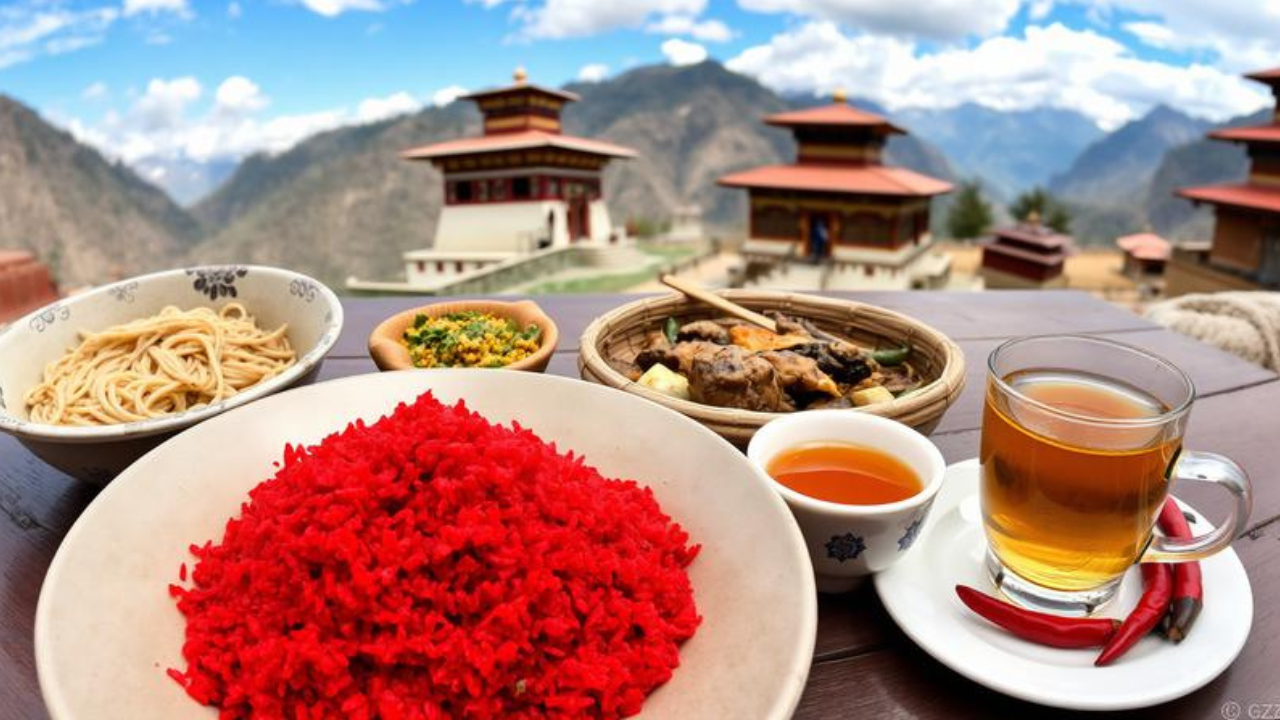
A typical meal is built around a mountain of starch—almost always red rice, a nutty, pinkish-brown short grain with a delightful chew. In Bumthang, buckwheat noodles or pancakes replace the rice. Surrounding this central mound, you’ll find a constellation of smaller bowls. At least one will be a datshi: ema datshi (chili and cheese) for the brave, kewa datshi (potato and cheese) for the comfort-seeker, or shamu datshi (wild mushroom and cheese) for an earthy depth. There will almost certainly be a vegetable dish—sautéed spinach with garlic, stewed fern fronds with butter, or lom (dried turnip leaves) rehydrated and cooked until tender. A lentil soup (dal) often provides a mild, protein-rich counterpoint to the chili heat. And perched on the side, a small bowl of ezay—a fresh, chunky chili salsa of chopped chilies, garlic, onion, tomato, and sometimes Sichuan pepper—acts as a customizable fire igniter.
If meat is included, it arrives as a separate dish: phaksha paa, jasha maroo, or a simple dried beef stir-fry. Drinks are part of the menu too. Suja (butter tea) is salty and savory, an acquired taste that most Bhutanese adore. Ngaja (sweet milk tea) is the safer bet, ubiquitous and comforting. For the adventurous, ara, a warm, cloudy grain alcohol often served with a fried egg floating on top, completes the feast. In tourist hotels, you’ll also find continental breakfast items, but the real joy is in eating what the family eats, off a bamboo mat, with your right hand, the rice soaking up every last drop of chili cheese.
BHUTAN FOOD RECIPES: BRING THE KINGDOM INTO YOUR KITCHEN
You don’t need a plane ticket to taste Bhutan. Here are two foundational recipes that demand minimal ingredients and deliver maximum soul.
Simple Home-Style Ema Datshi
-
6-8 fresh green serrano chilies (or jalapeños for less heat), split lengthwise, seeds intact
-
1/4 cup water
-
1 tablespoon unsalted butter
-
1/2 cup crumbled feta, queso fresco, or mild farmer’s cheese
-
Salt to taste
Simmer the chilies in water for 5 minutes until softened. Add butter, swirl to melt, then crumble in the cheese. Stir gently over low heat until the cheese creates a creamy, slightly lumpy sauce. Do not over-stir; you want small curds. Season with salt. Serve immediately over steamed red rice.
Buckwheat Pancakes (Khur-le)
-
1 cup buckwheat flour
-
1/2 teaspoon salt
-
1 cup water (approximately)
-
Butter for frying
Whisk flour, salt, and enough water to form a thin batter, similar to crepe batter. Heat a non-stick skillet, add a pat of butter, and pour a ladleful of batter, tilting to spread. Cook until edges curl and bubbles form on the surface, then flip. Serve with honey, fresh cheese, or a spicy tomato ezay.
Quick Ezay (Chili Salsa)
-
4 fresh red chilies, finely chopped
-
2 cloves garlic, minced
-
1 small tomato, diced
-
1 tablespoon chopped onion
-
Pinch of salt
-
Drizzle of vegetable oil
Combine all ingredients and let sit for 10 minutes. This salsa electrifies everything—rice, momos, eggs, even plain bread.
COUNTERARGUMENT OR NUANCE: NOT EVERYONE FALLS IN LOVE
I would be a less than honest guide if I didn’t acknowledge the criticisms that some visitors voice. Bhutanese food can be repetitive. The chili-cheese theme, however glorious, dominates the table with such force that by day five of a guided tour, you might find yourself craving a simple green salad or a bowl of plain broth. The spice level, while manageable for most, can genuinely overwhelm those with sensitive palates. Some find suja (butter tea) actively unpleasant—salty, greasy, and disorienting. Vegans face an uphill battle, as butter and cheese are foundational and the concept of strict plant-based eating is still new in many rural kitchens.
There is also the larger, uncomfortable question of authenticity for tourists. The all-inclusive tour model, while ensuring safety and comfort, can insulate visitors so thoroughly that they only encounter a mildly spiced, buffered version of the cuisine. Eating only in tourist restaurants is like reading the CliffsNotes of a novel. You get the plot but miss the poetry. The good news is that all of this is surmountable. Speak up. Tell your guide you want to eat where they eat. Communicate dietary needs clearly. The Bhutanese hospitality instinct is so strong that once they understand your preferences, they will move mountains—or at least melt more cheese—to accommodate you.
ACTIONABLE TAKEAWAYS
-
Communicate openly about spice and diet. Tell your guide or host: “Less chili, please” or “No cheese.” They will genuinely try to help.
-
Eat at one farmhouse. Your tour operator can arrange a farmhouse meal. It’s the single best way to taste the real, unvarnished cuisine.
-
Explore Thimphu’s cafe scene. For a break from the buffet, try The Zone, Ambient Café, or a local momo joint like Zombala.
-
Source red rice and buckwheat online. Start cooking Bhutanese food at home—the ingredients are increasingly available.
-
Be open to butter tea. Try it three times. The first sip shocks, the second intrigues, and the third often converts.
7 FAQs (INCLUDING YOUR TOP QUESTIONS ANSWERED)
1. What is the famous food of Bhutan?
The most famous food is undoubtedly ema datshi, a stew of fresh chilies and local cheese that serves as the national dish. Variations like kewa datshi (with potatoes) and shamu datshi (with mushrooms) are equally iconic.
2. Do we get halal food in Bhutan?
Yes, but it requires planning. Several restaurants in Thimphu and Paro, particularly those catering to Indian and Bangladeshi tourists, offer halal meat. If halal food is a requirement, communicate this clearly to your tour operator at the booking stage. They can arrange halal meals at your hotels and select restaurants. Vegetarian dishes, which are abundant, provide a safe and delicious default.
3. What is Nepali Bhutan dish?
Bhutan is home to a significant Lhotshampa (ethnic Nepali) community, and Nepali culinary influence is strong. The most common Nepali-Bhutan dish is dal-bhat-tarkari (lentil soup, rice, and vegetable curry), eaten daily by many families. Momos, originally Tibetan but enthusiastically adopted, and sel roti (a sweet, ring-shaped rice bread) are other beloved cross-cultural staples.
4. Is Bhutan a rich or poor country?
By conventional economic metrics (GDP per capita), Bhutan is a developing country with a relatively small economy. However, Bhutan famously measures success through Gross National Happiness (GNH) rather than GDP alone. It has made remarkable strides in health, education, and environmental conservation. Poverty has declined dramatically, and most citizens have access to free healthcare and education. So, it’s financially modest but remarkably rich in well-being, community, and ecological integrity.
5. Is vegetarian food easy to find in Bhutan?
Absolutely. Bhutanese cuisine has a vast vegetarian repertoire due to Buddhist principles. Dishes like kewa datshi, shamu datshi, vegetable momos, and lentil soups are staples.
6. What is the local alcohol in Bhutan?
Ara is the traditional home-brewed spirit, typically made from rice, barley, or maize. It’s often served warm, sometimes with butter and a fried egg. Beer lovers will find Bhutanese brands like Druk 11000 and Red Panda widely available.
7. Can I find Bhutanese food outside Bhutan?
Yes, Bhutanese diaspora communities have opened restaurants in cities like New York (Queens), Toronto, London, Melbourne, and Perth. Searching online for “Bhutanese momo” or “ema datshi” in these areas often yields hidden gems.
CONCLUSION
Bhutanese food is a landscape on a plate. It’s the sharp, sudden heat of a mountain chili, the earthy comfort of a buckwheat pancake, the slow-cooked depth of a pork stew, and the unshakeable generosity of a host who refills your bowl before you can protest. This isn’t a cuisine designed for Instagram; it’s a cuisine designed for connection, for warming bodies at altitude, and for turning simple, honest ingredients into a reason to gather. Whether you’re navigating a Thimphu menu, simmering ema datshi in your own kitchen, or wondering if halal food is within reach, the answer is rooted in the same philosophy: you are welcome, you are fed, and there is always more. In a world that often feels fragmented, the Bhutanese table remains a place where no one eats alone, where chili and cheese become a shared language, and where happiness is something you can taste.