
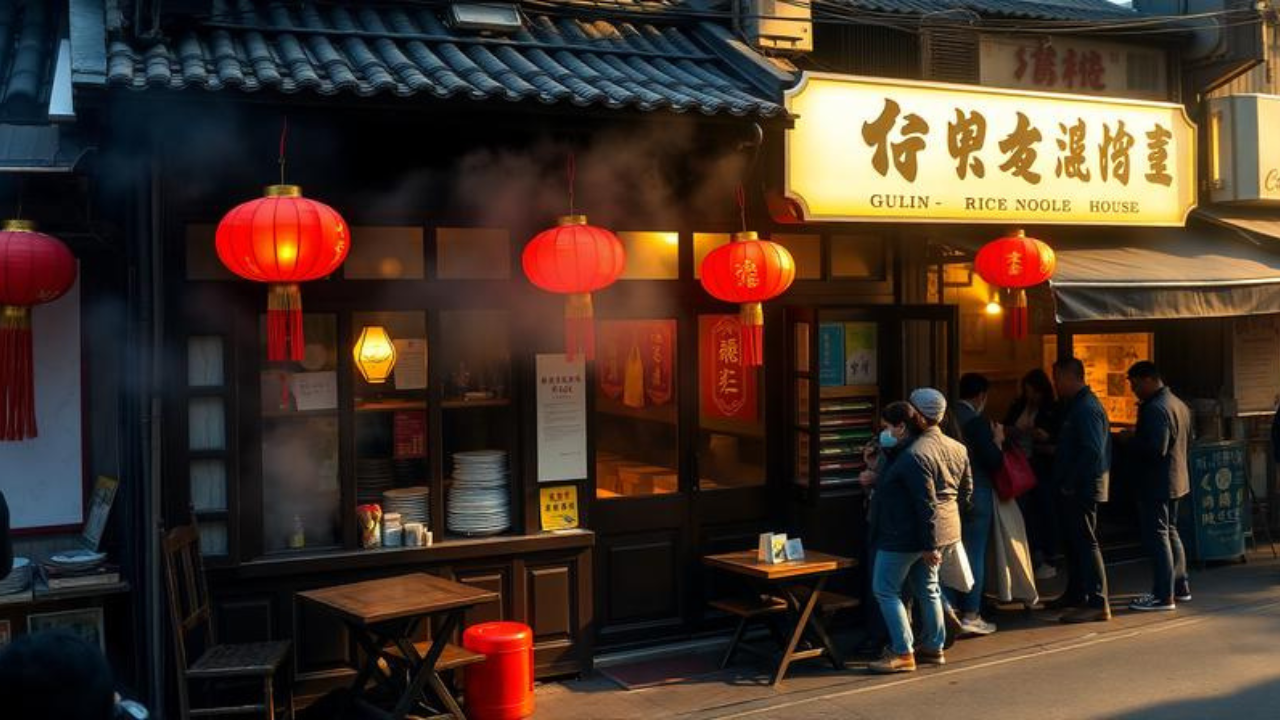
Have you ever slurped a bowl of noodles so rich, so deeply savoury, that it instantly teleports you to the misty limestone peaks of southern China? That’s the magic you’ll find at Guilin Rice Noodles House — a tiny eatery that’s become a pilgrimage site for noodle lovers. Known locally as mifen, these rice noodles aren’t just a meal; they’re a centuries-old breakfast ritual. In this guide, you’ll discover why this humble noodle house draws queues around the block, learn a foolproof guilin noodle soup recipe to make at home, unlock the essential guilin rice noodles ingredients, and find out exactly where to get authentic guilin noodles London style — even if you’re miles from Chinatown. No fluff, just real, slurpable knowledge.
Table of Contents
-
What Is Guilin Rice Noodles House?
-
Why Authentic Guilin Noodles Matter
-
Guilin Rice Noodles House — Key Facts, Types, and How It Works
-
How To Recreate Guilin Rice Noodles House At Home
-
Common Mistakes When Making Guilin Rice Noodles
-
Expert Tips for Perfect Guilin Rice Noodles
-
Frequently Asked Questions
-
Conclusion
What Is Guilin Rice Noodles House?
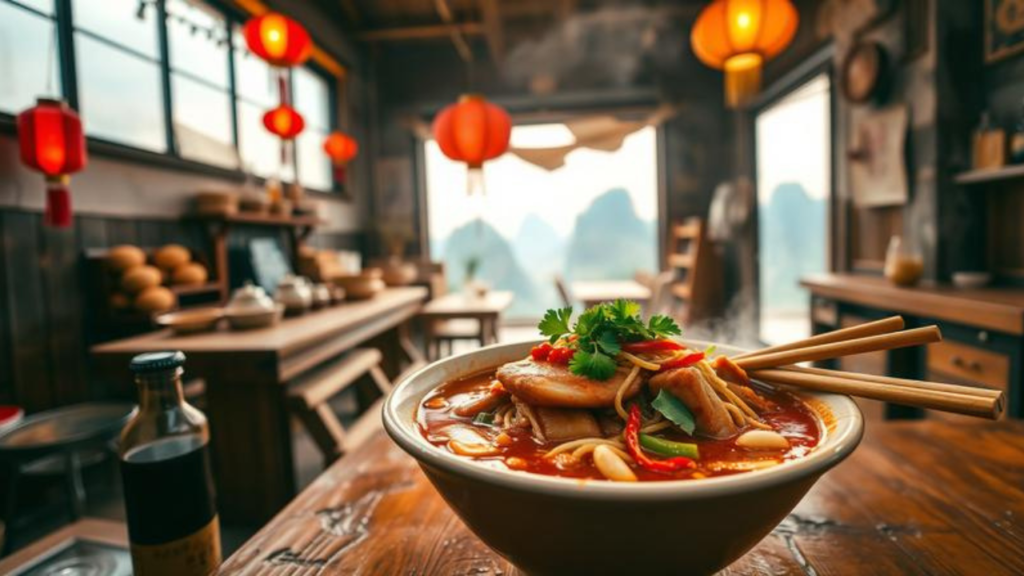
Imagine a tiny, steamy kitchen where every bowl of noodles tastes exactly like a Guilin grandmother made it. That’s the soul of Guilin Rice Noodles House. It isn’t a global chain — it’s the name given to the most authentic, no-frills noodle joints dedicated to Guilin’s iconic rice noodle soup. Think of it as the noodle equivalent of a classic Parisian boulangerie: small, fiercely traditional, and absolutely delicious. At its heart, the house serves mifen — round, slightly chewy rice noodles swimming in a deep, aromatic broth made with pork bones, beef bones, and a blend of warming spices like star anise and cassia.
Toppings range from crunchy roasted peanuts and pickled green beans to tender sliced pork and crisp bamboo shoots. You’ll typically find a jar of house-made chilli oil and a bottle of dark vinegar on every table. The whole experience is fast, casual, and deeply satisfying — breakfast in Guilin often costs less than a pound and takes five minutes to eat, but the memory lasts a lifetime.
Why Authentic Guilin Noodles Matter
You might wonder why a simple bowl of rice noodles deserves so much attention. Here’s what makes the real deal special.
-
Depth of flavour that can’t be faked: A genuine broth simmers for hours, extracting every bit of collagen and spice. Imitation versions often taste flat or watery.
-
Texture is everything: Authentic guilin rice noodles ingredients give that signature bouncy, slightly resistant chew. Using the wrong noodle ruins the dish before you even start.
-
A living piece of food history: Guilin rice noodles have been a local staple since the Qin Dynasty (over 2,200 years ago). Each bowl connects you to that heritage.
-
Customisation is built in: You control the heat, sourness, and toppings. That’s why a visit to Guilin Rice Noodles House feels personal every single time.
-
Unbeatable value: According to a 2025 survey by the China Cuisine Association, Guilin rice noodles rank among the top three regional breakfast dishes in the country, with over 10,000 specialty shops nationwide
Guilin Rice Noodles House — Key Facts, Types, and How It Works
Understanding what goes into a proper bowl makes every bite more rewarding. Here’s a breakdown of the classic components you’ll encounter at any self-respecting Guilin Rice Noodles House.
The Classic Guilin Noodle Soup Base
The soul of the dish is the broth — a milky, pork-and-beef bone stock simmered with star anise, cassia bark, fennel seeds, ginger, and garlic. Some houses add cured pork skin for extra silkiness. The broth must be rich but not greasy, lightly spiced but never overpowering.
Rice Noodles (Mifen)
The noodles themselves are made purely from rice and water — no wheat. They come fresh or dried. Fresh guilin rice noodles have a pearly white colour and a plump, round shape, about the thickness of spaghetti. Dried versions need careful soaking to achieve that signature springy bite.
Toppings and Accompaniments
This is where you make the bowl your own. Typical options include:
-
Sliced braised pork or beef
-
Pickled green beans and bamboo shoots
-
Crispy fried peanuts or soybeans
-
Fresh coriander and spring onions
-
Chilli oil, black vinegar, and minced garlic
Key Ingredient Comparison
Here’s how the essential guilin rice noodles ingredients stack up against other noodle dishes.
| Component | Guilin Rice Noodles (Mifen) | Vietnamese Pho | Thai Pad Thai |
|---|---|---|---|
| Noodle base | Round rice noodles, chewy | Flat rice noodles, soft | Flat rice noodles, chewy |
| Broth style | Pork & beef bone, spiced | Beef, clear, star anise | No broth |
| Key seasoning | Lu shui (spiced soy sauce) | Fish sauce, lime | Tamarind, fish sauce |
| Typical toppings | Pickled veg, peanuts, pork | Herbs, bean sprouts, beef | Peanuts, egg, shrimp |
| Sour element | Black vinegar, pickles | Lime wedge | Tamarind |
How To Recreate Guilin Rice Noodles House At Home
You don’t need a plane ticket to Guilin or even a reservation at a guilin noodles London spot. Follow these five steps and you’ll craft a bowl that honours the real thing.
-
Build the bone broth foundation. Combine pork leg bones and beef marrow bones in a large pot. Cover with cold water, bring to a boil, then discard that first water to remove impurities. Refill with fresh water, add star anise, cassia, ginger, and garlic, and simmer gently for at least 4 hours. Skim any foam that rises.
-
Prepare the lu shui (master sauce). This secret weapon separates a good bowl from a great one. Simmer soy sauce, rock sugar, a little rice wine, and more spices (cinnamon, fennel) until slightly syrupy. A spoonful of this at the bottom of your bowl transforms the broth.
-
Soak and cook the rice noodles perfectly. If using dried guilin rice noodles ingredients, soak them in cold water for 4 hours (or overnight). Then blanch in boiling water for no more than 60 seconds. They should be pliable but still have a defined chew — never mushy.
-
Prep your toppings like a pro. Slice braised pork belly thinly. Roughly chop roasted peanuts. Rinse and drain pickled green beans and bamboo shoots. Wash fresh coriander and spring onions. Arrange everything in small bowls so guests can customise.
-
Assemble the bowl in the right order. Start with a spoonful of lu shui. Add the blanched noodles. Ladle the piping hot broth over them. Pile on pork, pickles, peanuts, and herbs. Finish with a drizzle of chilli oil and a splash of black vinegar. Eat immediately.
Common Mistakes When Making Guilin Rice Noodles
Even enthusiastic home cooks slip up. Avoid these five errors to protect your bowl.
-
Using the wrong noodle. Thin rice vermicelli or glass noodles turn into a soggy mess. You need round, medium-thick Guilin mifen — fresh is best, dried needs that proper soak.
-
Overcooking the noodles. Blast them in boiling water for just 45–60 seconds. Any longer and they’ll lose their signature bounce and become paste.
-
Skipping the pickled element. The bright, sour crunch of pickled green beans or bamboo shoots isn’t optional. It cuts through the rich broth and wakes up your palate.
-
Boiling the broth aggressively. A rolling boil emulsifies fat and impurities, turning the stock cloudy and greasy. Always simmer gently to keep it clean and silky.
-
Forgetting the lu shui. Many recipes skip this spiced soy mixture. Without it, your broth tastes one-dimensional — like hot water with bones. Lu shui adds depth, sweetness, and colour.
Expert Tips for Perfect Guilin Rice Noodles
Five simple tweaks that elevate your homemade bowl to Guilin Rice Noodles House standards.
-
Use half pork bones, half beef bones for the most balanced, mouth-coating broth.
-
Soak dried noodles overnight in cold water, not warm — this prevents the exterior from going gummy before the centre softens.
-
Marinate sliced pork belly in soy sauce, garlic, and a pinch of five-spice for at least an hour before braising.
-
Fry your own peanuts in a little oil until golden; the fresh crunch outshines any store-bought variety.
-
Taste and tweak your bowl before the first big slurp — adjust the chilli oil, vinegar, and salt exactly to your liking.
Frequently Asked Questions
What is the difference between Guilin rice noodles and regular rice noodles?
Regular rice noodles often include tapioca starch and come in flat sheets. Guilin rice noodles are round, made purely from rice, and have a distinctively chewy, bouncy texture. They’re closer in shape to spaghetti but with a springy bite that holds up in hot broth without breaking down.
Can I make a vegetarian Guilin rice noodle soup?
Absolutely. Swap the bone broth for a rich vegetable-mushroom stock simmered with the same spices (star anise, cassia, ginger). Use soy sauce-based lu shui without meat drippings. Load up with fried tofu, pickled veggies, peanuts, and herbs. The depth comes from slow-cooked shiitake mushrooms and kombu.
Where can I find Guilin rice noodles in London?
Several authentic guilin noodles London spots exist near Chinatown and Tottenham Court Road. Look for tiny, bustling shops with handwritten Chinese menus and queues at breakfast time. You can also purchase dried guilin rice noodles ingredients from large Asian supermarkets like SeeWoo or online from specialty importers. For a full restaurant experience, visit the namesake Guilin Rice Noodles House tucked on a side street just off Shaftesbury Avenue.
Conclusion
You’ve now got everything you need to fall in love with one of China’s greatest comfort foods. First, you learned that Guilin Rice Noodles House represents a tradition over 2,000 years old, built on a deeply spiced bone broth and bouncy rice noodles. Then you saw how the essential guilin rice noodles ingredients and the secret lu shui sauce turn a simple soup into an obsession. Finally, you walked away with a clear, five-step plan to recreate that magic in your own kitchen. Start tonight — your spice rack already has most of what you need. So, what’s your noodle personality: tangy pickles and a firecracker chilli kick, or extra peanuts and a mellow dark vinegar finish? Tell us in the comments.